

 BETWEEN THE MICROPHONE AND THE GUN:
When a Journalist Loses His Toga and a Minister Reaches for the Trigger
By Maxwell Menkiti Ngene, PhD
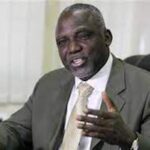
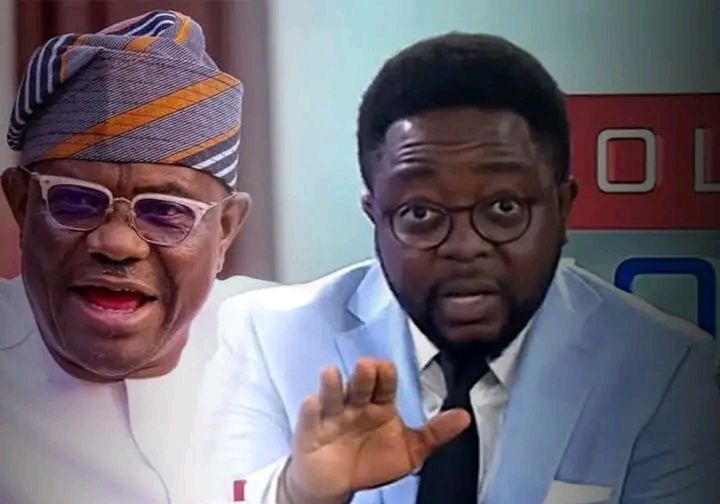
The drama that unfolded between Nyesom Wike, Nigeria’s Minister of the Federal Capital Territory, Abuja and Channels Television’s revered anchor Seun Okinbaloye last week has done what Nigerian controversies often do which is to generate enormous heat and very little light. Social media has been awash with the story and taken sides along predictably political lines. Wike’s supporters have cheered. Seun’s defenders have raged. And somewhere in the noise, two genuinely important questions have gone unanswered: Did Seun cross a professional line? And was Wike’s response acceptable from a man who holds one of the most powerful offices in the land?
The honest answer to both questions is ‘Yes’. And that honesty is precisely what this conversation genuinely needs.
SEUN’S SIN: THE JOURNALIST WHO FORGOT HIS TOGA
Let us start with Seun Okinbaloye, because his error came first and, in a strict sense, triggered everything that followed.
Seun is not a newcomer to Nigerian broadcasting. He is one of the most recognizable faces on Channels Television, a platform that has built its reputation, albeit controversially at times on the idea of independent, agenda-free journalism. When you sit behind that desk, you carry that brand. You carry the trust of millions of Nigerians who tune in expecting a professional, not a partisan.
So when Seun said on live television that “they” would not allow a one-party state in Nigeria, he did not merely stumble. He fell. That single word, “they,” is the problem. Not the sentiment, necessarily, but the language and the platform. “They” implies membership. It implies that Seun has a side, a camp, a stake in the political contest he is supposed to be refereeing. For a journalist of his stature and visibility, that is an extraordinary lapse.
Channels Television’s audience is not monolithic. It includes Nigerians across the full breadth of the political spectrum who trust the broadcast outlet precisely because it is not supposed to be anybody’s mouthpiece. The moment an anchor speaks in the language of political solidarity on air, that trust begins to crack.
Now, some critics will argue and not without an intellectual basis — that journalistic neutrality is itself a luxury that becomes untenable when democracy is under genuine threat. Some of the finest journalists in history have been openly adversarial to power. But even that tradition demands discipline: you declare your position, you frame your advocacy as advocacy, and you let your audience make informed judgments. What you do not do is slip into the language of political solidarity on a popular live television news programme while still wearing the coat of an objective broadcaster. That is not courage. That is confusing.
Seun is better than this. He is too experienced, too visible, and frankly too talented to be making errors that a fresh graduate from a mass communication department would be warned against in his first week of lectures. A journalist of his stature should know that the moment the audience begins to ask whose side he is on, he has already lost the most valuable currency in broadcasting which is credibility.
WIKE’S WORDS: WHEN POWER REACHES FOR THE TRIGGER
But if Seun’s error was one of professional judgment, Wike’s response was a failure of something far more serious. It is a failure to understand what democratic governance requires of those who hold power over others.
Wike said he felt like shooting Seun through the television screen. His defenders have rushed to explain this as a figure of speech, a piece of colourful Nigerian hyperbole, nothing more than a frustrated man venting his feelings. And perhaps, in the privacy of his sitting room, it might have remained exactly that. But Wike is not a private citizen venting to his family over a dinner table. He is a sitting minister of the Federal Republic of Nigeria, one of the most politically influential figures in the Tinubu administration. And Seun is not a political opponent. He is a journalist, doing his job, however imperfectly.
When a federal minister or indeed any top government functionary declares, even figuratively, that he wanted to shoot a journalist, the words do not stay figurative for long. They travel. They reach the ears of security personnel, overzealous political associates, and individuals who may rightly interpret such fury as authorization for action. In a country with Nigeria’s history, where journalists have been harassed, detained, had their offices invaded, and in the darkest seasons of our national life, paid with their lives for the simple act of doing their work. The language of violence directed at a broadcast journalist by a powerful government official is not a joke. It is a signal of highhandedness, impunity, insensitivity and disrespect for life as a primary value.
What makes Wike’s outburst even more troubling is the moral framing he wrapped around it. He presented his rage as righteous indignation on behalf of professional standards, positioning himself, with characteristic audacity, as a defender of journalistic ethics in the very act of threatening a journalist. This is the particular sleight of hand that power in Nigeria has perfected over the decades: claiming the moral high ground at the precise moment of descending from it.
If Wike had a legitimate grievance about Seun’s professional conduct and, as we have established, he had grounds for one — there were legitimate avenues open to him. A formal complaint to the management of Channels Television’s. A petition to the Nigerian Broadcasting Commission (NBC), which exists precisely to regulate broadcast conduct. A measured public rebuttal through his own media team. These are the instruments that a democratic government official reaches for when he believes the press has erred. Instead, the minister chose the language of a man who has never entirely shed the habits forged in the crucible of Rivers State’s most turbulent political seasons.
That is not governance. That is not civility. It is intimidation wearing the costume of indignation.
THE JUDGE, THE JOURNALIST, AND THE STANDARD WE MUST DEMAND
There is a reason we hold journalists and judges to similar standards of neutrality. Both occupy positions of public trust that derive their authority entirely from perceived impartiality. The moment a judge is seen to favour one party, his rulings lose legitimacy, regardless of their legal merit. The moment a journalist is seen to favour one party, his reportage loses credibility, regardless of its factual accuracy. The toga, as it were, is not a decoration. Far from it, it is the very source of the immense power both professions wield.
I’m very sure that Seun knows this. He has spent years behind the Channels Television desk building the kind of professional reputation that most Nigerian broadcasters can only aspire to. It is precisely because of that reputation that his lapse on this occasion stings so sharply. We hold him to a high standard not to be cruel, but because he himself established that standard. To abandon it, even momentarily, on a matter as charged as Nigeria’s current political configuration, is to hand his critics and many have long questioned Channels Television’s editorial posture the exact ammunition they have been waiting for.
Wike, for his part, must reckon with a truth that power has a way of obscuring: that the office he occupies is held in trust and belongs ultimately to the Nigerian people, and with it comes an obligation to model the kind of civic conduct that a democratic society requires of its leaders. A minister who responds to press conduct, however objectionable, with the language of physical violence or death, metaphorical or otherwise has told us something important about how he conceives the relationship between government and the fourth estate of the realm. It is not a reassuring picture, and no amount of rhetorical reframing can make it one.
A WORD TO THE GALLERY
It would be incomplete to analyze this affair without acknowledging the role of the Nigerian public in amplifying its worst elements. The reflexive tribalism with which social media commentators have approached this ugly incident cheering Wike if you oppose the current political opposition, defending Seun if you sympathize with it is precisely the environment in which both the abuse of press freedom and the intimidation of the press can thrive. When we make every public controversy a matter of which team wins rather than which principle holds, we weaken the very institutions we claim to be defending.
Seun Okinbaloye is not the property of any political party or movement. Nyesom Wike is not above the democratic norms that govern how public officials may and may not speak. Both of these things can be true simultaneously, and holding them together requires the kind of intellectual honesty that Twitter’s architecture is specifically designed to discourage.
—
CONCLUSION: BOTH MEN OWE NIGERIA BETTER
Strip away the noise and what remains is a portrait of two institutions under strain — Nigerian journalism and Nigerian democracy itself. A press that cannot maintain its independence, whether compromised by political sympathy from within or by ministerial intimidation from without, cannot perform the watchdog function that a healthy democracy requires of it. And a political class that responds to media scrutiny, even flawed media scrutiny with threats rather than engagement demonstrates, with painful clarity, why an independent and courageous press remains so desperately needed in this country.
Seun must return to the professional discipline and editorial rigour that carved a niche for him. The millions of Nigerians who built their viewing loyalty around him did not do so to watch him become a commentator with a press card. His power lies in the questions he asks, not the positions he takes. Let him reclaim that power.
Wike, on the other hand, must understand or be reminded that the enormous political capital he commands was never, at any point, a licence to silence the voices that exist precisely to hold him to account. Not with a gun. Not with the suggestion of one. Democratic governance demands more of its custodians than that, and the Nigerian public deserves to receive it.
Between the microphone and the gun, there is a wide and important space. It is the space where democracy breathes. Both men, for a moment, forgot that. It is not too late for either of them to remember.
Maxwell Menkiti Ngene, PhD, is a Senior Lecturer in the Department of Mass Communication, Enugu State University of Science and Technology (ESUT), and a public affairs analyst with extensive experience in public affairs broadcasting and political communication.
EDITOR
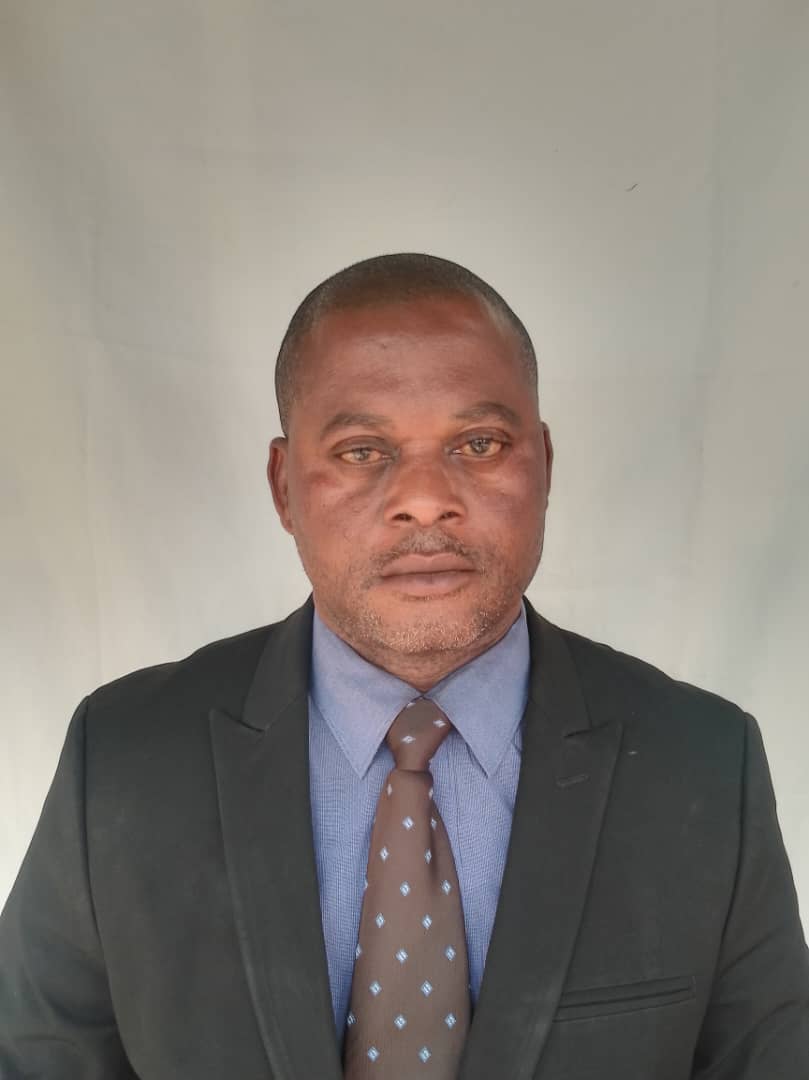
Sam Udekwe is a journalist working in the News and Current Affairs department, Enugu State Broadcasting Service (ESBS) Enugu. He is well trained in all genres of journalistic venture.
Mr Sam read Mass Communication, graduating all with Distinction in National Diploma, Higher National Diploma and Postgraduate Diploma at IMT, Enugu and Madonna University, Okija, Anambra state, as well as M.Sc Mass Communication at National Open University of Nigeria.
He is the immediate past NUJ Chairman, Enugu state.
samowailo@gmail.com