









 2027 Election: The PVC Controversy And The Truth About Alternative Voter Identification
INEC maintains PVC requirement for voter accreditation as downloadable replacement cards spark debate; Nigerians urged to disregard misleading social media claims and verify electoral information
By Sam Udekwe
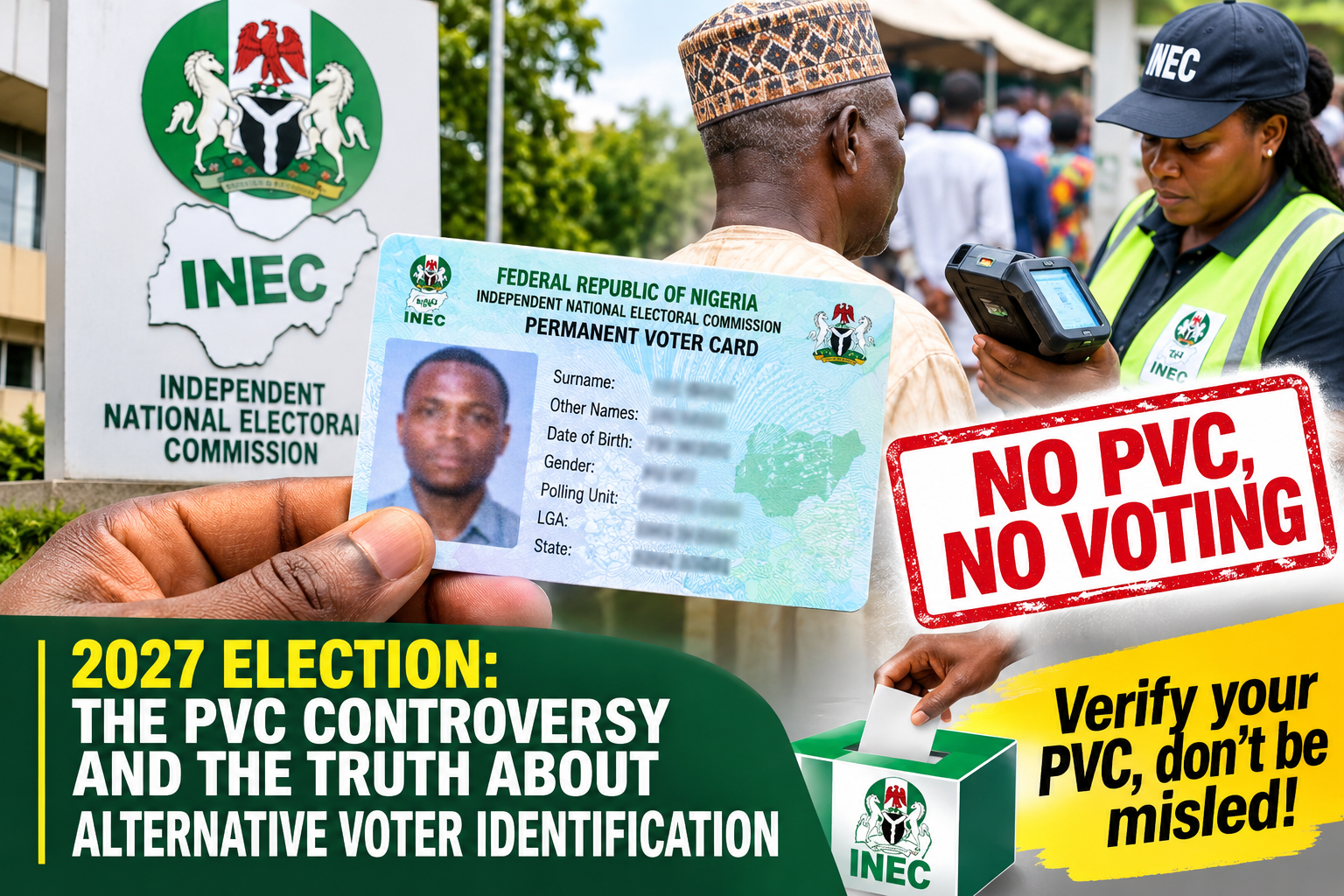
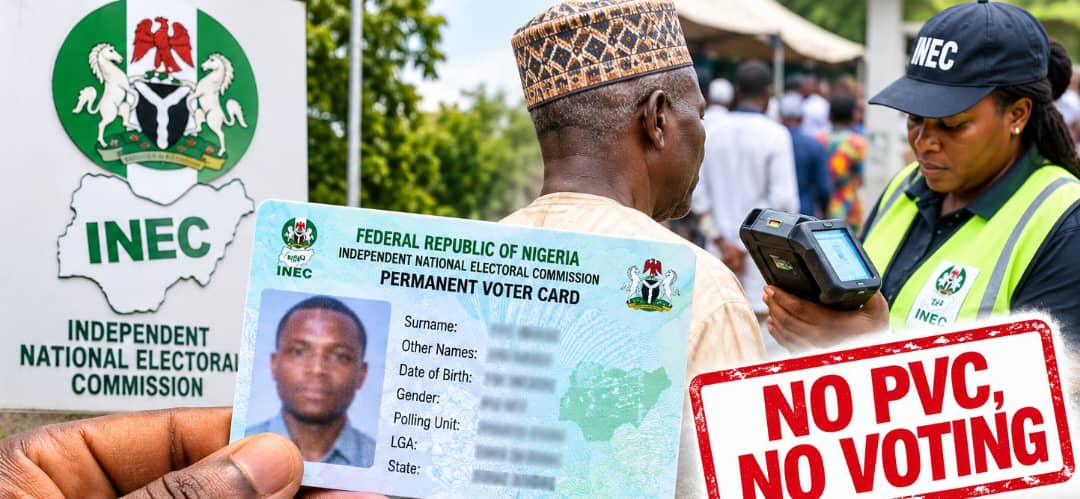
As political activities gradually gather momentum ahead of Nigeria’s 2027 general elections, a fresh controversy surrounding the use of Permanent Voter Cards (PVCs) has ignited public debate, with conflicting interpretations emerging over whether registered voters can exercise their franchise without presenting the physical cards at polling units.
The controversy follows claims circulating on social media suggesting that voters can download and print their registration details from the Independent National Electoral Commission (INEC) portal as an alternative to the PVC during elections.
However, a closer examination of Nigeria’s electoral framework and INEC’s established accreditation procedures indicates that such claims, when presented as a general authorisation to vote without a PVC, are misleading.
The distinction between being registered as a voter, possessing evidence of registration and satisfying the statutory requirements for electoral accreditation is fundamental to understanding the controversy.
Under Section 47 of the Electoral Act 2026, presentation of a Permanent Voter Card remains a central requirement for voter accreditation. The provision is reinforced by INEC’s established guidelines, which require voters to undergo authentication through the Bimodal Voter Accreditation System (BVAS).
Consequently, a printout of registration details, downloaded voter information or a screenshot from the Commission’s portal does not automatically qualify as a substitute for the officially recognised PVC.
THE DOWNLOADABLE PVC: WHAT THE LAW ACTUALLY SAYS
The controversy, however, is not entirely without legal foundation. Section 18(1) of the Electoral Act 2026 contains a provision relating to downloadable replacement PVCs, particularly for eligible voters whose previously issued cards have been lost or damaged.
In an analysis titled “Downloadable PVC: What the New Electoral Law Really Says”, the Policy and Legal Advocacy Centre (PLAC) examined the implications of the provision and highlighted the legal distinction between downloadable replacement copies and the PVC required for accreditation under Section 47.
The organisation drew attention to other provisions governing the issuance and replacement of PVCs, including the responsibility of INEC to regulate the process and ensure that replacement cards are properly authenticated.
The implication is that the downloadable replacement provision should not be misconstrued as a blanket authorisation for every registered voter to present a self-printed registration slip at a polling unit.
Indeed, the distinction between an officially authorised replacement card and an ordinary printout of voter registration information remains critical.
INEC’s digital replacement initiative, which its portal identifies as a pilot for eligible applicants in Osun State, further underscores the need to distinguish between regulated replacement procedures and unrestricted access to printable voter credentials.
PVC COLLECTION AHEAD OF 2027
Meanwhile, INEC has commenced nationwide collection of newly issued PVCs ahead of the 2027 general elections.
The exercise began at designated Registration Area (Ward) centres on October 9, 2026, and continued at INEC Local Government Area offices from October 16.
The initiative accommodates newly registered voters, eligible applicants seeking transfers, those requiring replacement cards and individuals who are yet to collect their previously issued PVCs.
The Commission has urged eligible voters to verify their registration details and collect their cards through the designated channels.
For voters whose PVCs have been lost, damaged or defaced, the appropriate course is to initiate the prescribed replacement procedure rather than assume that a photocopy, screenshot or self-generated printout will suffice for electoral accreditation.
THE DANGER OF ELECTORAL MISINFORMATION
Beyond its legal implications, the controversy exposes the growing danger of electoral misinformation, particularly as social media increasingly becomes a primary source of information for millions of Nigerians.
Misinterpretation of electoral provisions could discourage eligible voters from collecting their PVCs, create avoidable confrontations with electoral officials and undermine public confidence in the electoral process.
At a time when Nigeria is preparing for another consequential democratic exercise, the circulation of unverified electoral information is particularly troubling.
INEC, therefore, has a responsibility to provide an unequivocal public clarification on the precise status of downloadable replacement PVCs, the categories of voters eligible to obtain them and their acceptability for accreditation at polling units.
Such clarification would eliminate ambiguity, discourage speculative interpretations and ensure that voters are adequately informed about the requirements for participating in the elections.
The media, political parties and civil society organisations must equally demonstrate responsibility by disseminating verified information rather than amplifying claims capable of misleading the electorate.
THE WAY FORWARD
Ultimately, the PVC controversy should serve as a reminder that electoral participation requires not only political enthusiasm but also adequate knowledge of the laws and procedures governing the democratic process.
While technological innovation and digital alternatives are desirable in modern electoral administration, their introduction must be guided by clear legal provisions and unambiguous operational guidelines.
For now, Nigerians should not mistake access to their voter registration information for an automatic entitlement to vote without satisfying INEC’s accreditation requirements.
As the countdown to the 2027 general elections gathers momentum, eligible voters should verify their registration status, collect their PVCs and rely on official communications from the electoral commission.
The message is simple but consequential: Do not allow misleading social media claims to jeopardise your democratic right. Verify the facts, secure your PVC and be prepared to vote.

EDITOR
Sam Udekwe is a journalist working in the News and Current Affairs department, Enugu State Broadcasting Service (ESBS) Enugu. He is well trained in all genres of journalistic venture.
Mr Sam read Mass Communication, graduating all with Distinction in National Diploma, Higher National Diploma and Postgraduate Diploma at IMT, Enugu and Madonna University, Okija, Anambra state, as well as M.Sc Mass Communication at National Open University of Nigeria.
He is the immediate past NUJ Chairman, Enugu state.
samowailo@gmail.com