




 Obi Poised to Join ADC as Opposition Coalition Rallies Ahead of 2027
Strong indications have emerged that Peter Obi, former Labour Party presidential candidate, is set to formally join the African Democratic Congress (ADC) as part of a broad opposition realignment ahead of the 2027 general election.
Multiple sources familiar with the evolving coalition told newsmen that discussions around Obi’s entry into the ADC have advanced significantly, with party structures already being adjusted to accommodate his political base and the wider Obidient movement.
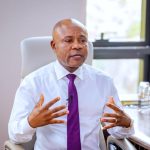
The development was confirmed on Tuesday in Abuja by Sam Amadi, former chairman of the Nigeria Electricity Regulatory Commission (NERC) and a close ally of Obi. According to Amadi, lessons from the 2023 election and the prevailing national mood have made the logic of a unified opposition platform increasingly compelling.
“There is now a clear realisation that opposition unity is non-negotiable if the ruling party is to be challenged effectively,” Amadi said, adding that a disciplined and coherent coalition could end the All Progressives Congress’ (APC) hold on power by 2027.
Party insiders say groundwork is already underway within the ADC. The recent defection of Ireti Kingibe, senator representing the Federal Capital Territory, and Nenadi Usman, co-chair of the Kaduna State Working Committee of the multiparty coalition, is seen as evidence that Obi’s loyalists are positioning strategically ahead of his anticipated formal move.
Obi’s expected entry into the ADC presidential race is likely to raise the stakes at the party’s primaries, which could also feature former Vice President Atiku Abubakar, former Rivers State governor and ex-transport minister Rotimi Amaechi, alongside other political heavyweights.
For many opposition figures, the ADC is increasingly viewed as the most viable platform for presenting a united front against the APC in 2027.
Reflecting on the 2023 election, Amadi noted that although the enthusiasm that mobilised millions of young Nigerians under the Obidient banner has waned, it has not disappeared.
“Many young people are discouraged and disappointed, but they can be brought back,” he said, stressing that renewed hope would depend on effective mobilisation, credible messaging and a stronger defence of votes. He added that improved oversight of the Independent National Electoral Commission (INEC) and resistance to intimidation would be critical to any opposition success.
According to Amadi, the opposition’s failure in 2023 was largely due to divided votes and widespread allegations of electoral manipulation. “Now we have another opportunity, but unity must come before individual ambition,” he said, adding that Obi’s entry would significantly enhance the coalition’s prospects.
“If Peter Obi comes on board, as he is likely to do by the end of the year, it substantially increases the chances of success,” he said.
The ADC’s National Publicity Secretary, Bolaji Abdullahi, said the party is currently focused on strengthening its internal structures nationwide rather than zoning or ticket permutations.
“Our priority for now is organisational consolidation,” Abdullahi said, noting that the party favours a consensus approach in selecting its presidential candidate, but would resort to primaries if consensus fails.
“Right now, we are engineering the party’s structures and driving membership. Issues like zoning will be addressed at the appropriate time,” he said.
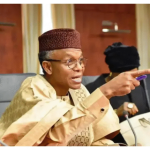
Within the ADC-led coalition, Atiku, Amaechi and Obi are widely regarded as frontrunners, though disagreements persist over which region should produce the presidential candidate. Abdullahi, however, downplayed the tension, saying, “When we get to the bridge, we will know how to cross it.”
Obi has previously stated that he would serve only a single term if elected president in 2027.
In the 2023 presidential election, Atiku of the Peoples Democratic Party polled 6,984,520 votes (29.07 per cent) to finish second, while Obi secured 6,101,533 votes (25.40 per cent), winning 11 states, including Lagos and the Federal Capital Territory. The Labour Party also won the Abia State governorship, 34 House of Representatives seats and seven senatorial seats.
Meanwhile, Katchy Ononuju, an ADC chieftain, warned that Nigeria was drifting towards a one-party state but insisted that the opposition would resist such a trend.
“The APC is clearly scared because of the failing economy, insecurity and hunger ravaging the country,” he said, alleging that intimidation of opposition figures was part of a strategy to weaken resistance.
Similarly, Umar Ardo, a supporter of Atiku and lecturer at the University of Maiduguri, argued that economic hardship could erode the APC’s grip on the North in 2027.
“No northern governor will be able to deliver the region to the APC,” Ardo said, describing the ADC as the party to watch amid what he called a mass exodus of politicians, particularly in the North-West.

EDITOR
Sam Udekwe is a journalist working in the News and Current Affairs department, Enugu State Broadcasting Service (ESBS) Enugu. He is well trained in all genres of journalistic venture.
Mr Sam read Mass Communication, graduating all with Distinction in National Diploma, Higher National Diploma and Postgraduate Diploma at IMT, Enugu and Madonna University, Okija, Anambra state, as well as M.Sc Mass Communication with Second Class(Upper Division) at National Open University of Nigeria.
He is the immediate past NUJ Chairman, Enugu state.
samowailo@gmail.com