








 Enugu’s Smart Green Schools Take Centre Stage in Cotonou, SDG Focal Person Honoured
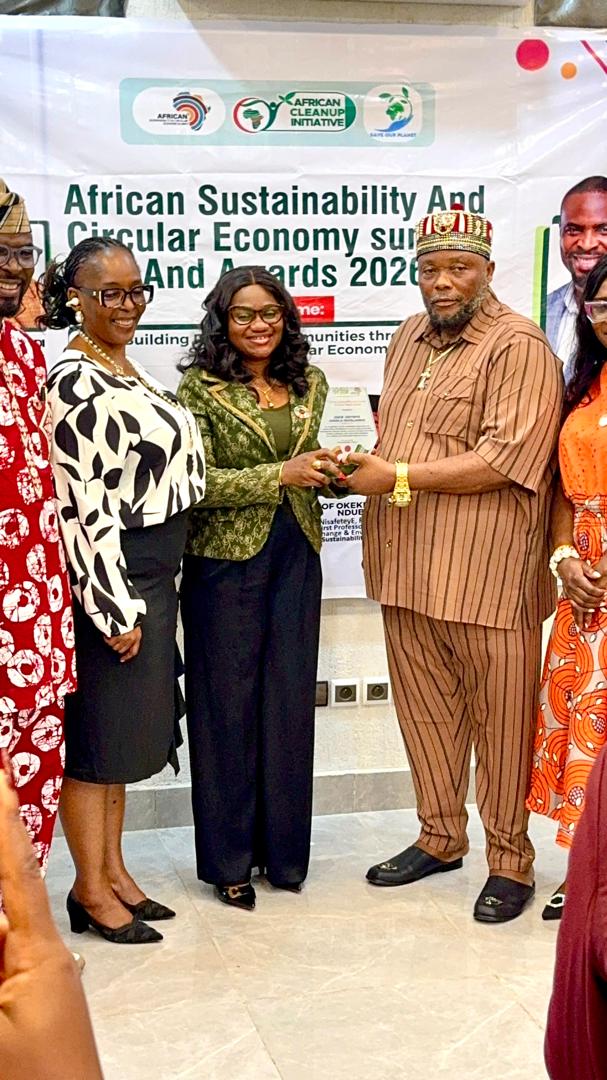
Enugu State has received continental recognition for its sustainable development initiatives, as the state’s Sustainable Development Goals (SDGs) Focal Person and Senior Special Assistant to the Governor on SDGs, Engr. Onyinye Akubuilo-Okpalanma, was honoured with an award of recognition at the African Sustainability and Circular Economy Conference in Cotonou, Republic of Benin.
Akubuilo-Okpalanma also delivered a lecture at the conference on the theme, “Localising the SDGs for Community Impact,” where she presented Enugu State’s Smart Green Schools Project as a practical model for translating the global Sustainable Development Goals into tangible community-level interventions.
Speaking to participants drawn from across Africa, she explained that sustainable development should not remain confined to international commitments and policy documents, but must be reflected in projects and programmes that directly improve the lives of citizens.
Using the Smart Green Schools initiative as a case study, the Enugu SDG Focal Person demonstrated how a single, strategically designed intervention could contribute to the achievement of multiple SDGs simultaneously.
She said the project goes beyond the provision of school buildings, describing it as an integrated development model that brings together education, healthcare, nutrition, technology, renewable energy, agriculture, inclusion and environmental sustainability.
According to her, the project contributes to the attainment of SDG 1 (No Poverty) by reducing barriers to access to quality basic education, particularly for children from poor and vulnerable households.
She noted that its school-feeding and agricultural components support SDG 2 (Zero Hunger) by improving pupils’ nutrition while exposing them to modern and sustainable agricultural practices.
The inclusion of school-based health facilities, she added, advances SDG 3 (Good Health and Well-being), while modern classrooms, science laboratories, ICT centres, interactive learning facilities and innovation spaces support SDG 4 (Quality Education).
Akubuilo-Okpalanma further explained that the schools promote SDG 5 (Gender Equality) through inclusive access to education for boys and girls, while improved water, sanitation and hygiene facilities contribute to SDG 6 (Clean Water and Sanitation).
She said the deployment of solar-powered systems in the schools supports SDG 7 (Affordable and Clean Energy) by reducing dependence on conventional power sources and demonstrating the practical application of renewable energy.
The project also advances SDG 8 (Decent Work and Economic Growth) through exposure to technical, vocational and entrepreneurial skills, while its digital infrastructure, science laboratories and innovation facilities contribute to SDG 9 (Industry, Innovation and Infrastructure).
On SDG 10 (Reduced Inequalities), she stressed that the project was designed to ensure that access to quality educational facilities would not be determined by the economic status of a child’s parents.
She added that the establishment of modern and sustainable schools within communities contributes to SDG 11 (Sustainable Cities and Communities), while environmental education and sustainable agricultural practices promote SDG 12 (Responsible Consumption and Production).
According to her, the use of solar energy and the integration of environmental education into the learning process further support SDG 13 (Climate Action), while the emphasis on agriculture, ecosystems and environmental stewardship contributes to SDG 15 (Life on Land).
The Enugu SDG Focal Person told the conference that the major lesson from the Smart Green Schools experience was that localising the SDGs did not require governments to develop 17 separate projects for the 17 goals.
Rather, she said, “carefully designed interventions can produce multiplier effects across several development targets simultaneously.”
Her presentation positioned Enugu State as an emerging example of how subnational governments can translate the global SDG framework into practical interventions with direct community impact.
The high point of the conference was the presentation of an award of recognition to Akubuilo-Okpalanma for her contributions to sustainable development and the advancement of the SDGs.
Receiving the award, she dedicated the honour to the Enugu State Governor, Barr. Dr. Peter Ndubuisi Mbah, acknowledging his commitment to translating development policies into projects and initiatives that impact positively on the lives of residents.
She described the recognition as, in many respects, an acknowledgement of the broader development vision of the Mbah administration and the collective efforts of the state government towards achieving inclusive and sustainable development.
Akubuilo-Okpalanma’s participation in the African Sustainability and Circular Economy Conference also provided an opportunity to showcase Enugu State’s development agenda to a wider continental audience and strengthen its visibility in discussions around sustainability, circular economy, climate action and SDG localisation.
She emphasised that the SDGs would ultimately be achieved not merely through global conferences and policy documents, but through interventions in schools, homes, farms, communities and institutions where development directly touches the lives of the people.
The Smart Green Schools Project, she noted, provides a practical demonstration of what that localisation can achieve.
EDITOR
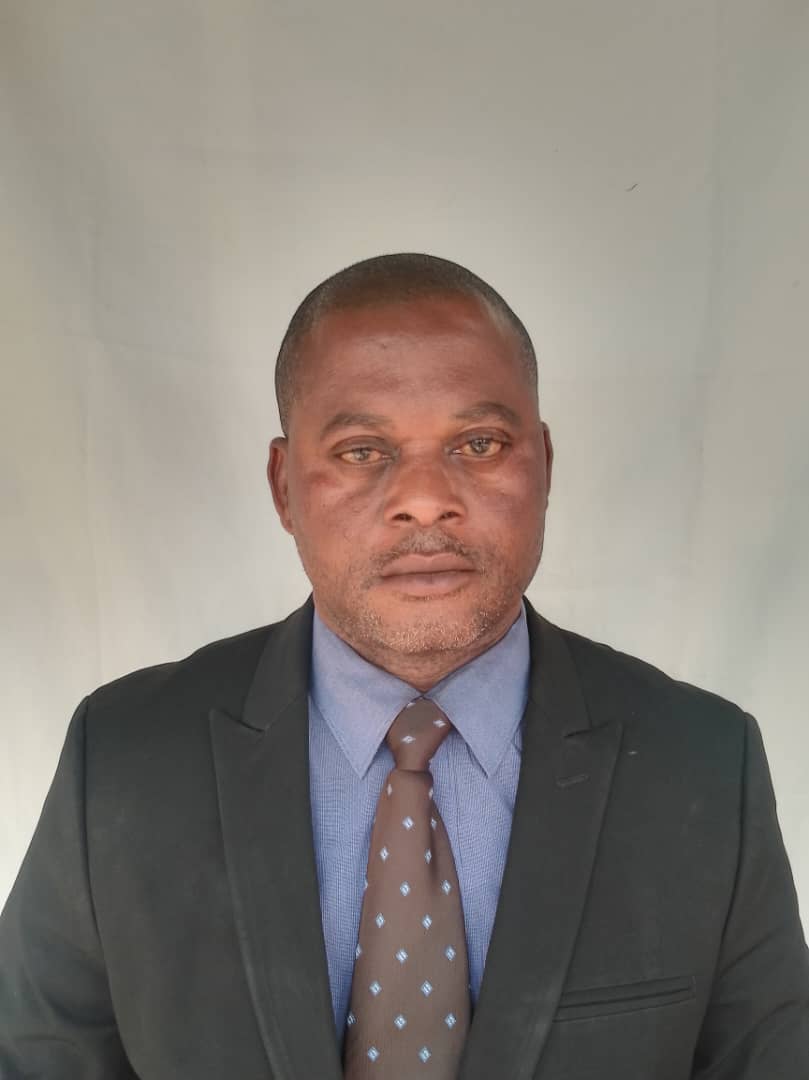
Sam Udekwe is a journalist working in the News and Current Affairs department, Enugu State Broadcasting Service (ESBS) Enugu. He is well trained in all genres of journalistic venture.
Mr Sam read Mass Communication, graduating all with Distinction in National Diploma, Higher National Diploma and Postgraduate Diploma at IMT, Enugu and Madonna University, Okija, Anambra state, as well as M.Sc Mass Communication at National Open University of Nigeria.
He is the immediate past NUJ Chairman, Enugu state.
samowailo@gmail.com