










 ESUT Don Proposes 60% Capital Fund Model to Tackle Corruption in Local Governments
…Says councils receive between ₦500m and ₦700m monthly
A Professor of Public Administration at the Enugu State University of Science and Technology (ESUT), Frederick Odo Eze, has proposed a new fiscal framework for local government administration in Nigeria, advocating that 60 per cent of monthly statutory allocations to the councils be dedicated exclusively to capital projects.
Eze, who made the proposal while delivering the university’s 60th inaugural lecture, argued that the framework, which he christened the “Eze Model of Federal Revenue Utilisation,” would address the perennial challenges of corruption, financial misappropriation and infrastructural decay at the grassroots.
Speaking on the theme, “Local Government Administration, Fiscal Federalism, and Structural Reforms in Nigeria,” the don identified the mismanagement of public funds and structural deficiencies as major impediments to effective local government administration and sustainable rural development.
He described local government as the tier of government closest to the people and a critical foundation for democratic governance and development, lamenting, however, that its enormous financial resources had increasingly become a source of institutional dysfunction rather than a catalyst for grassroots transformation.
According to him, the situation reflects a “resource-curse syndrome in which substantial financial allocations have failed to translate into commensurate improvements in the living conditions of rural communities”.
Tracing the historical evolution of local government administration from the native authority system introduced during the colonial era under Lord Lugard to the emergence of Nigeria’s 774 local government areas, Prof. Eze noted that the system had continued to grapple with structural and financial challenges.
He disclosed that individual local government areas receive monthly allocations ranging from ₦500 million to ₦700 million, yet the impact of such resources on grassroots development remains largely inadequate.
The professor also cited estimates indicating that approximately ₦4.2 trillion in local government allocations was allegedly diverted, misappropriated or subjected to substantial deductions through joint-account arrangements between 1999 and 2002.
“The local government remains the perennial sick baby in the government structure of Nigeria. Despite Supreme Court victories affirming direct allocations, state-level interference, caretaker committees and grand corruption continue to suffocate grassroots development,” he said.
The Eze Model
To address these challenges, Eze proposed a restructuring of local government revenue utilisation under which 40 per cent of monthly statutory allocations would be transferred directly to councils for salaries, personnel costs and administrative overheads, while the remaining 60 per cent would be channelled into capital projects through a proposed Federal Grants Board or equivalent state-level institutions.
He explained that the proposed board would be responsible for financing critical infrastructure in health, education, water supply and rural development, thereby ensuring that public resources deliver tangible benefits to communities.
The model, he added, would adopt a bottom-up participatory approach known as “Visit Every Rural Community” (VERC), under which community leaders and other stakeholders would identify five priority projects requiring government intervention.
According to him, the selected projects would undergo competitive bidding and be subjected to independent monitoring, transparent procurement procedures and milestone-based implementation.
He further proposed that the oversight mechanism should involve anti-corruption agencies, including the Economic and Financial Crimes Commission (EFCC) and the Independent Corrupt Practices and Other Related Offences Commission (ICPC), alongside professional bodies such as the Nigerian Bar Association (NBA), the Institute of Chartered Accountants of Nigeria (ICAN) and the Nigerian Society of Engineers (NSE).
Eze said the framework would establish an institutional safeguard against the diversion of public funds and ensure that capital allocations were utilised strictly for their designated purposes.
“This model provides a fence and a firewall around the federal statutory allocation to local governments in Nigeria. It reduces to the barest minimum the quantity of floating funds susceptible to instances of grand corruption, eradicating the resource-curse syndrome that has crippled our rural communities,” he stated.
Drawing parallels with the Education Trust Fund, now known as the Tertiary Education Trust Fund (TETFund), the professor expressed optimism that sustained implementation of the proposed model over ten years would significantly reduce infrastructural deficits across rural communities.
He said the initiative could also generate millions of jobs for unemployed youths, reduce rural-to-urban migration and strengthen public confidence in democratic governance by making development more visible at the grassroots.
From humble beginnings to professorship
Beyond the policy discourse, Eze began his inaugural lecture with a personal account of his early life, using his educational journey to illustrate the importance of resilience, discipline, mentorship and community values in the pursuit of academic excellence.
Recounting his childhood, the professor disclosed that he was born in 1964, coinciding with the traditional Odo festival in his community, a circumstance that influenced his parents’ decision to name him Odo.
“I was born in 1964, coinciding with the ‘Odo’ traditional festival of my community; hence, my parents named me ‘Odo’. I have maintained the name Odo up to this day,” he said.
He also recalled that his passion for education became evident when he was barely three years old, as he persistently followed his older siblings to St. Mary’s Primary School, now Holy Ghost School.
According to him, his determination attracted the attention of one of the school’s teachers, the late or veteran Papa Benedict Abogu, who was present at the auditorium and received a thunderous ovation from the audience.
Eze said his emergence as a professor was the product of a gradual process shaped by early exposure to education, the guidance of mentors, personal discipline and the values instilled in him by his community.
“I did not just wake up to become a professor. I started somewhere in my educational career. My mentors, community values and sheer discipline steered me through a life of scholarship,” he said.
The inaugural lecture provided an opportunity for the academic to reflect on his personal journey while advancing policy recommendations aimed at repositioning local government administration as an effective instrument of inclusive development, accountability and democratic renewal in Nigeria.
EDITOR
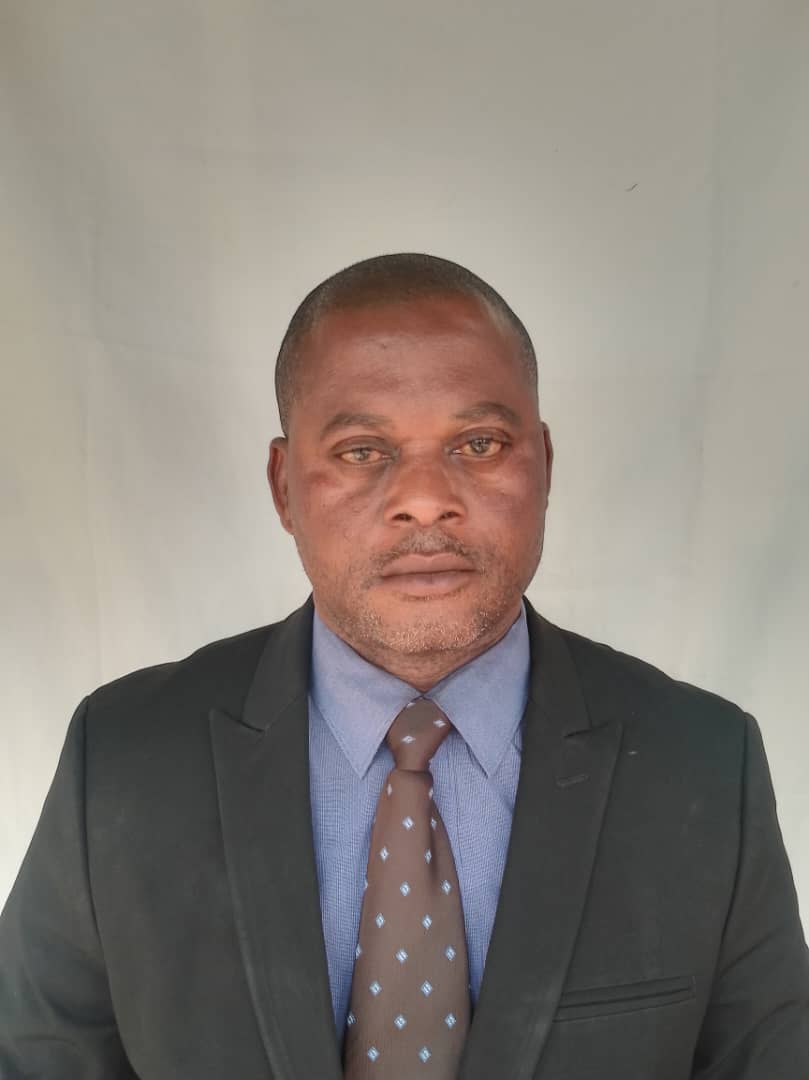
Sam Udekwe is a journalist working in the News and Current Affairs department, Enugu State Broadcasting Service (ESBS) Enugu. He is well trained in all genres of journalistic venture.
Mr Sam read Mass Communication, graduating all with Distinction in National Diploma, Higher National Diploma and Postgraduate Diploma at IMT, Enugu and Madonna University, Okija, Anambra state, as well as M.Sc Mass Communication at National Open University of Nigeria.
He is the immediate past NUJ Chairman, Enugu state.
samowailo@gmail.com