








 Enugu’s Zoning Model a Blueprint for Democratic Stability -Stakeholders
Stakeholders from across political, traditional, academic and business circles have described the zoning arrangement for the governorship position in Enugu State as a model of political inclusion and democratic stability worthy of emulation across Nigeria.
They said the rotational formula, which has ensured the sharing of political power among the three senatorial districts of the state since the return to democratic rule in 1999, has entrenched peace, unity, fairness and mutual trust among the various cultural blocs in the state.
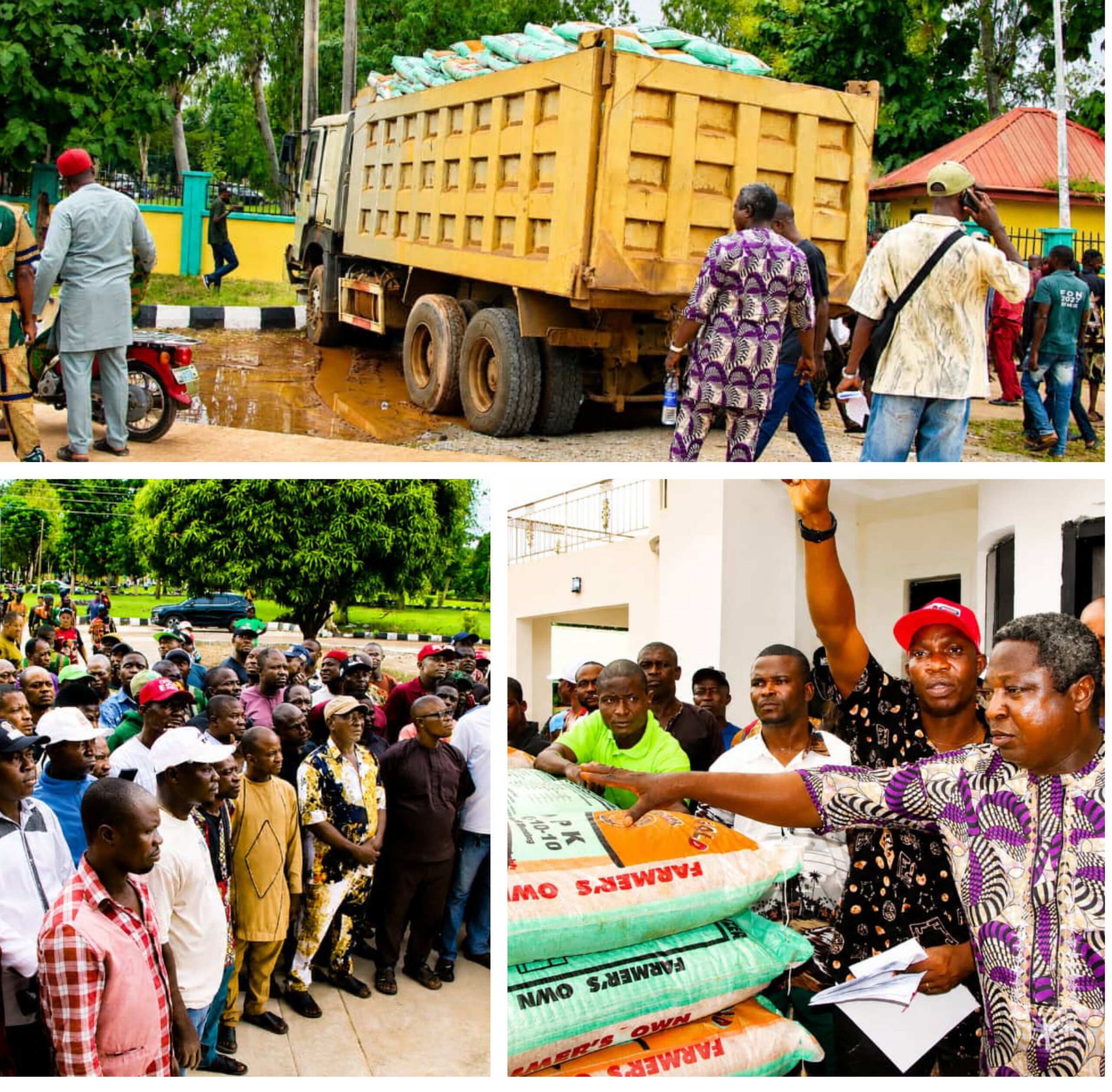
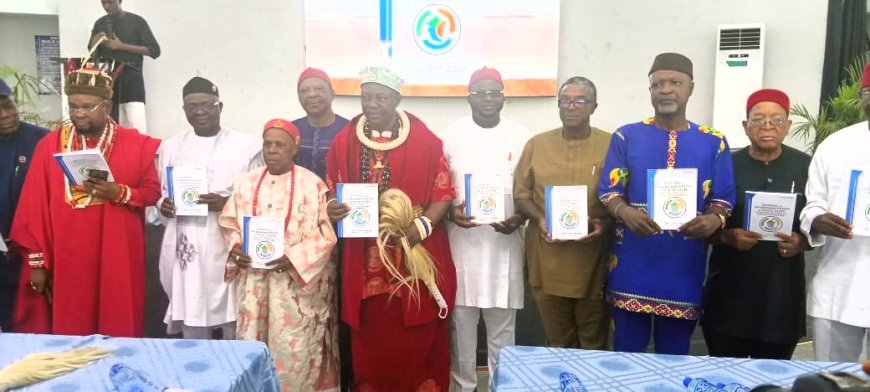
The stakeholders spoke in Enugu during the public presentation of a book titled “Zoning of Governorship Position in Enugu State: Evolution, Practice and Convention,” co-authored by Dr Uche Anioke, Dr Ambrose Igboke, Dr Chikezie Obasi and Clinton Umeh.
The event attracted a large gathering of academics, traditional rulers, political office holders, students, captains of industry and media professionals.
The book examined the evolution of the zoning arrangement in Enugu State, its consistency since the beginning of the Fourth Republic, and the role it has played in fostering political stability, justice, equity and inclusiveness in governance.
Reviewing the book, Founder and President of Michael Okpara Leadership and Entrepreneurial Centre, University of Nigeria, Nsukka, Dr Chinedu Onuh, described the Enugu experience as “one of the most successful political balancing mechanisms in Nigeria’s democratic history.”
According to him, although the zoning arrangement was not formally codified when it commenced in 1999, political actors in the state embraced it as a moral and democratic convention in the interest of fairness and peaceful coexistence.
“Enugu State has demonstrated that democracy thrives better where justice and inclusion are deliberately nurtured. The rotational governorship arrangement has reduced bitterness, minimised political domination and strengthened confidence among the various senatorial districts,” Onuh said.
He noted that the success of the formula was evident in the relative peace and stability the state had enjoyed compared to some other states where fierce struggles for power often generated crises and divisions.
“Some states that abandoned or failed to evolve acceptable rotational arrangements have continually battled grievances, accusations of marginalisation and political instability. Enugu chose a different path, and the result is the remarkable harmony we are witnessing today,” he stated.
Drawing parallels with national politics, Onuh said the principle behind Enugu’s zoning formula was not different from the power rotation arrangement between the North and South at the federal level.
“In a plural society like Nigeria, power sharing remains a stabilising instrument. The presidency rotating between the North and South is fundamentally rooted in the same philosophy of inclusion and balance. It is also the logic behind the federal character principle and even the quota system in certain aspects of national life.
“These mechanisms may not be perfect, but they are products of our diversity and historical realities. Without deliberate balancing structures, some sections may feel excluded, and that could threaten national cohesion,” he added.
Chairman of the occasion and traditional ruler of Ezema Olo in Ezeagu Local Government Area, Igwe Ambassador Lawrence Agubuzu, commended the authors for documenting what he described as “one of Enugu State’s greatest democratic assets.”
Agubuzu traced the history of the zoning arrangement from the administration of former Governor Chimaroke Nnamani through subsequent administrations, noting that the spirit of mutual understanding among political leaders had sustained the system.
“Before now, many people saw zoning as merely a political understanding, but this book has elevated it into a documented democratic culture. That is very important for posterity and political education,” he said.
The monarch said the arrangement had helped to eliminate fear of exclusion among the different zones of the state.
“When people are assured that power will rotate and every section will have a sense of belonging, the desperation for power reduces significantly. The atmosphere becomes healthier for governance and development,” Agubuzu added.
Also speaking, Chairman of Enugu State Traditional Rulers Council, Igwe Samuel Asadu, described zoning as a practical demonstration of justice and equity in governance.
According to him, societies that consciously protect fairness and balance usually enjoy peace and faster development.
“Our forefathers understood the importance of balance in leadership and community affairs. What Enugu State has done politically is a reflection of that age-long wisdom. No society can grow where some groups permanently feel sidelined,” Asadu said.
He urged political actors in the state to preserve the culture irrespective of changing political interests.
“As traditional rulers, we encourage anything that promotes peace, unity and collective progress. The zoning arrangement has contributed immensely to political stability in Enugu State and should be sustained,” he stated.
Speaking on behalf of Governor Peter Mbah, the Commissioner for Information and Communication, Dr Malachy Agbo, said the book was coming at a critical time in Nigeria’s democratic journey.
Agbo noted that the Enugu model had shown that political inclusion and development could coexist effectively.
“The administration of Governor Peter Mbah believes strongly in inclusive governance. Development can only be sustainable where the people have confidence in the political process and feel adequately represented,” he said.
He added that the state’s political history since 1999 had proven that zoning did not diminish competence but rather expanded participation and strengthened unity.
“There is nowhere zoning says competent people should not emerge. What it simply does is to guarantee that all sections of society have opportunities to contribute to leadership and governance,” Agbo stated.
He further argued that federal character and quota systems in Nigeria were created for similar reasons.
“Nigeria is too diverse to ignore balancing mechanisms. Federal character, quota system and power rotation are all responses to the challenge of national integration. The important thing is to implement them in ways that still encourage merit, excellence and healthy competition,” he added.
In separate remarks, Hon. Emeka Ukwuaba, who represented the Managing Director of COMAG Group of Companies, Chief Cosmas Agu, and Chinagorom Egbo, who represented Captain Everest Nnaji, commended the intellectual depth of the book and described it as a major contribution to political scholarship in Nigeria.
Ukwuaba said the publication would serve as a reference material for policymakers, students and researchers interested in democratic governance and conflict management.
“This is beyond Enugu politics. The book touches on national issues of inclusion, equity and political stability. It offers practical lessons for Nigeria and other multi-ethnic societies,” he said.
On his part, Egbo described the zoning arrangement as “a silent stabiliser” that had enabled Enugu State to avoid unnecessary political tension over the years.
“When leadership is shared fairly, people concentrate more on development than on political battles. That is one of the hidden strengths of the Enugu model,” he noted.
Speaking on behalf of the co-authors, Dr Uche Anioke said the decision to embark on the project was driven by the need to properly document an important democratic culture that had shaped the political identity of Enugu State.
Anioke explained that younger generations needed to understand the historical foundations and benefits of the zoning arrangement.
“We felt that if this experience is not documented, future generations may not fully appreciate the sacrifices, negotiations and understanding that helped to build political harmony in Enugu State,” he said.
According to him, the authors were motivated by the desire to preserve institutional memory and stimulate intellectual conversations around inclusive governance.
“This work is not propaganda for any individual or political group. It is a scholarly effort to examine a political culture that has contributed significantly to peace and stability in Enugu State,” Anioke stated.
He added that the book also sought to encourage constructive national discourse on power sharing and democratic accommodation in Nigeria.
“Nigeria’s diversity requires wisdom in leadership recruitment and political management. Inclusion is not weakness; it is a strategy for unity and national survival,” he said.
So far, the governorship position in Enugu state has sustained rotation thus; Enugu East senatorial district- Dr Chimaroke Nnamani(1999-2007), Enugu West senatorial district- Barr Sullivan Chime(2007-2015), Enugu North senatorial district-Rt Hon. Ifeanyi Ugwuanyi(2015-2023), then beginning another cycle of rotation, Dr Peter Mbah, the current governor of Enugu State is from Enugu East senatorial district(from 2023).
The chairman of All Progressives Congress APC, Enugu State, Dr Martin Chuwunweike, also graced the occasion, while former minister of Innovation, Science and Technology, Chief Uche Nnaji, was represented by Chukwunonye Okereke.

EDITOR
Sam Udekwe is a journalist working in the News and Current Affairs department, Enugu State Broadcasting Service (ESBS) Enugu. He is well trained in all genres of journalistic venture.
Mr Sam read Mass Communication, graduating all with Distinction in National Diploma, Higher National Diploma and Postgraduate Diploma at IMT, Enugu and Madonna University, Okija, Anambra state, as well as M.Sc Mass Communication at National Open University of Nigeria.
He is the immediate past NUJ Chairman, Enugu state.
samowailo@gmail.com