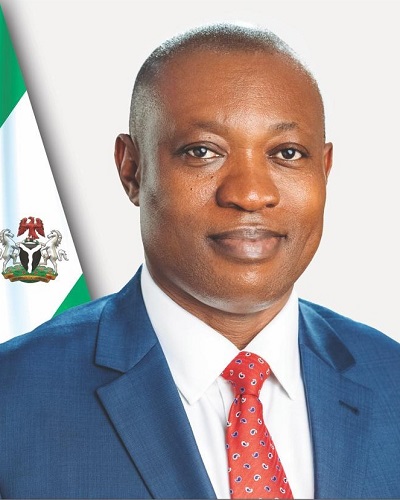





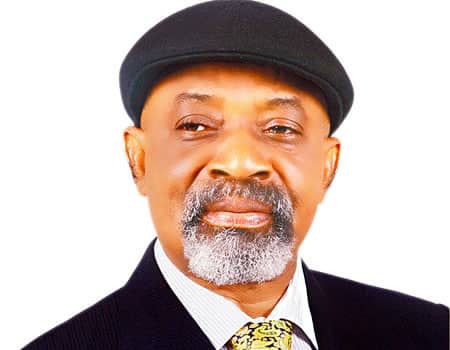
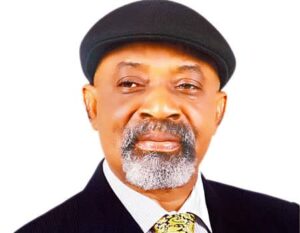
 Celebrating Leadership Personified, Dr Chris Nwabueze Ngige (MD, CON, FNMA) @ 74
By Dr Nkemjika Amadi
At 74, Dr. Chris Nwabueze Ngige, CON, FNMA, stands as one of the most remarkable personalities to have traversed Nigeria’s political and public-service landscape in the past four decades.
Some leaders are remembered merely because they occupied public offices. Others are remembered because they transformed those offices into platforms for service, reform and development. Ngige belongs to the latter category.
His name has become synonymous with courage in adversity, principled leadership, political resilience, administrative competence and an unwavering commitment to the public good.
A medical doctor by training, accomplished administrator, former governor, former senator, former Minister of Labour and Employment and seasoned politician, Ngige has, over the years, carved a distinctive niche for himself in Nigeria’s contemporary political history.
As he celebrates his 74th birthday, his journey offers a compelling narrative of a man whose career has straddled medicine, public administration, democratic politics, governance and national service.
From medicine to public service
Born in Alor, Idemili South Local Government Area of Anambra State, Ngige began his professional journey in medicine.
He graduated from the University of Nigeria, Nsukka, in 1979 with a Bachelor of Medicine and Bachelor of Surgery (MBBS/BM.BCh). He subsequently served at the National Assembly Clinic and the State House Medical Centre before rising through the ranks in the Federal Ministry of Health.
He retired meritoriously in 1998 as a Deputy Director in the Federal Ministry of Health, having established himself as a committed medical practitioner and public servant.
His transition from medicine into partisan politics in the late 1990s marked the beginning of another chapter in a career that would eventually take him to the highest levels of state and federal governance.
As a founding member of the Peoples Democratic Party, PDP, Ngige served as Assistant National Secretary and later as South-East Zonal Secretary.
The 2003 watershed
In 2003, Ngige was elected Governor of Anambra State on the platform of the PDP.
His tenure was, however, almost immediately engulfed by a fierce political confrontation with his erstwhile political godfather, Chief Chris Uba.
The defining episode occurred on July 10, 2003, when Ngige resisted an attempt to force him out of office through unconstitutional means.
His refusal to succumb to political intimidation transformed the episode into a defining moment in Anambra’s democratic history. For many citizens, it represented a decisive challenge to the culture of political godfatherism and the subversion of democratic institutions.
The date has subsequently been commemorated by sections of Anambra society as Anambra Liberation Day.
Beyond the political drama, Ngige’s administration embarked on an ambitious programme of infrastructure renewal, financial discipline, institutional reform and social-sector development.
Fiscal discipline and workers’ welfare
One of the earliest priorities of the administration was to restore confidence in the state’s public finances.
His administration cleared outstanding salary arrears, settled a substantial portion of pension arrears and paid gratuities owed to workers and retirees.
An Executive Order placing salaries and pensions on First Line Charge was also introduced, a policy that was subsequently backed by legislation in the state.
Pension payments were increased significantly, while the regular payment of salaries and pensions became an important feature of the administration.
For many observers, the fiscal reforms represented one of the enduring aspects of the Ngige administration.
Roads and infrastructure
Perhaps the most visible legacy of his administration was its aggressive road construction programme.
The administration constructed hundreds of kilometres of asphalt roads, complemented by reinforced concrete drainage systems, across the three senatorial zones.
Several major roads were constructed or reconstructed, linking communities and opening up economic corridors across the state.
Among them were the Isuochi–Owerre Ezukala–Ogbunka–Umunze–Umuchu–Amesi–Uga–Ezinifite–Igboukwu corridor; the Otuocha–Aguleri–Umuleri–Nteje–Awkuzu–Abagana–Eziowelle–Abatete–Uke–Alor–Nnokwa route; and the Nnobi–Nnewi–Ozubulu–Ihembosi–Okija–Ihiala axis.
Other major projects included the Isseke–Orsumoghu–Ukpor–Utuh–Nnewi–Awka Etiti road, Amawbia–Nibo–Mbaukwu–Agulu road and Onitsha–Atani–Osemala–Ogwu–Ikpere road.
The administration also reconstructed several roads in Onitsha, Awka and Nnewi, while undertaking the dualisation of Nnamdi Azikiwe Avenue in Awka.
The durability of several of those roads years after their construction remains one of the issues frequently cited by his admirers in assessing his tenure.
Education and the return of missionary schools
Education was another major area of intervention.
The Ngige administration entered into agreements with religious bodies and private school proprietors for the return of schools to their original missionary owners.
The Catholic delegation included Archbishop Albert Obiefuna, Archbishop Valerian Okeke, Bishop Hilary Odili Okeke and Bishop Simon Okafor, while the Anglican delegation was led by Archbishop Maxwell Anikwenwa and other senior church leaders.
By October 1, 2005, dozens of primary and secondary schools had been returned to their original owners, while government continued to bear the salaries of teachers and non-teaching staff.
The administration also strengthened primary education through the Universal Basic Education programme, including the payment of counterpart funding, recruitment of teachers and provision of instructional materials.
At the tertiary level, Anambra State University was restructured into a multi-campus institution, while accreditation was secured for numerous academic programmes, including Law, Medicine and Engineering.
Healthcare: the doctor as governor
As a medical doctor, Ngige brought particular attention to healthcare delivery.
His administration resolved a prolonged doctors’ strike, restored confidence among health workers and fulfilled counterpart-funding obligations to international donor agencies.
General hospitals in Onitsha and Awka received attention, with facilities upgraded and modern medical equipment provided.
The administration also strengthened primary healthcare by recruiting doctors for local government health facilities and introducing incentives aimed at encouraging medical professionals to serve in rural communities.
Security and community policing
Security was another priority.
The administration established the Anambra State Vigilante Services through legislation, creating a formalised community-based security structure.
At a time when insecurity was a major concern in the state, the initiative was credited by supporters with helping to strengthen community security and make the state less hospitable to criminal elements.
Markets, water and urban renewal
The administration also undertook the relocation and decongestion of major markets dealing in building materials, textiles and electrical goods from congested parts of Onitsha to locations including Ogidi, Ogbunike, Bridge Head and Oba.
Water supply also received attention, with the Onitsha and Awka water schemes revived and pipe-borne water restored to residents.
Another enduring symbol of his administration was the change of the state’s slogan from “Home for All” to “Light of the Nation.”
From AC to APC
Following the political crisis that trailed his confrontation with the PDP establishment in Anambra, Ngige left the PDP and became a founding member of the Action Congress, AC.
He worked alongside prominent political figures including Bola Ahmed Tinubu, Atiku Abubakar, Bisi Akande and Segun Osoba.
The AC subsequently evolved into the Action Congress of Nigeria, ACN, and later became part of the political coalition that produced the All Progressives Congress, APC.
In the 2011 general election, Ngige contested the Anambra Central Senatorial seat on the ACN platform and defeated Professor Dora Akunyili of APGA.
His political influence also helped the ACN make significant inroads into Anambra State, winning seats in the State House of Assembly and the House of Representatives.
His Buhari prediction
Ahead of the 2015 general election, Ngige emerged as one of the prominent voices advocating greater South-East participation in the APC.
He also predicted that Muhammadu Buhari would defeat the incumbent President Goodluck Jonathan, at a time when such an outcome was widely considered unlikely.
The eventual APC victory gave Buhari the distinction of becoming the first opposition presidential candidate in Nigeria’s Fourth Republic to defeat an incumbent president.
Ngige was subsequently appointed Minister of Labour and Employment, a position he held for two consecutive terms between 2015 and 2023.
Eight years at Labour Ministry
At the Ministry of Labour and Employment, Ngige deployed his experience in administration, labour relations and public service to a sector often characterised by difficult negotiations between government, organised labour and employers.
During his tenure, several moribund and dilapidated labour offices and skills acquisition centres were renovated and restored.
The National Directorate of Employment, NDE, was repositioned, while additional skills acquisition opportunities were created.
His tenure also witnessed the resolution of numerous labour disputes involving government, employers and workers.
One of the significant milestones credited to his labour diplomacy was Nigeria’s return to the Governing Body of the International Labour Organisation, ILO, after a prolonged absence.
His engagement in international labour diplomacy subsequently saw Nigeria attain the presidency of the ILO Governing Body.
A statesman beyond partisan politics
Despite the controversies that have accompanied Nigerian politics over the years, Ngige’s supporters point to his record of accepting judicial decisions and respecting constitutional processes.
When the Court of Appeal eventually upheld the judgment that removed him from the Anambra governorship, he handed over power peacefully.
For his admirers, that episode further demonstrated a willingness to subordinate personal political interest to the rule of law.
His stewardship of public resources has also remained a subject of discussion, particularly claims concerning the financial position of Anambra State at the end of his administration and the findings of the Justice Ononiba Commission of Inquiry.
Family and continuing intellectual development
Beyond politics, Ngige is a family man.
He is married to Dr. Evelyn Ngige, a paediatrician and former Permanent Secretary, and they are blessed with three children, all of whom, according to his admirers, have followed distinguished professional paths.
He is also a recipient of several honours, including the Fellowship of the Nigeria Medical Association, FNMA, in recognition of his contributions to the medical profession and healthcare development.
His commitment to continuous learning has remained evident even after decades in public service. In 2025, he participated in a Harvard Kennedy School certificate programme in Boston, focusing on public-private partnerships and related governance issues.
The “Onwa” at 74
Popularly known as “Onwa”, the moon that shines and cannot be hidden, Ngige remains an influential figure in Anambra and Nigerian politics.
His admirers see his political journey as a story of resilience: from medicine to public administration, from state governance to the National Assembly, and ultimately to the federal cabinet.
At 74, his legacy extends beyond the roads constructed, schools reformed, hospitals upgraded and institutions strengthened during his years in government.
It is equally reflected in the courage with which he confronted political intimidation, the fiscal discipline associated with his administration, his interventions in labour relations and his enduring commitment to public service.
For a man whose career has survived political upheavals, party realignments, electoral contests and the inevitable controversies of public life, longevity itself is significant.
But beyond longevity, it is the imprint left on institutions and people that ultimately defines leadership.
As Dr. Chris Nwabueze Ngige marks his 74th birthday, his journey remains a study in courage, resilience, governance and service.
For his admirers, he has earned his place among the notable political figures of contemporary Nigeria—not merely because he held important offices, but because of the conviction with which he approached them.
Happy 74th birthday, Dr. Chris Nwabueze Ngige, CON, FNMA—an exemplary leader, courageous reformer, distinguished statesman and, indeed, leadership personified.
Dr Nkemjika Amadi, a university don, writes from Awka, Anambra State.
EDITOR
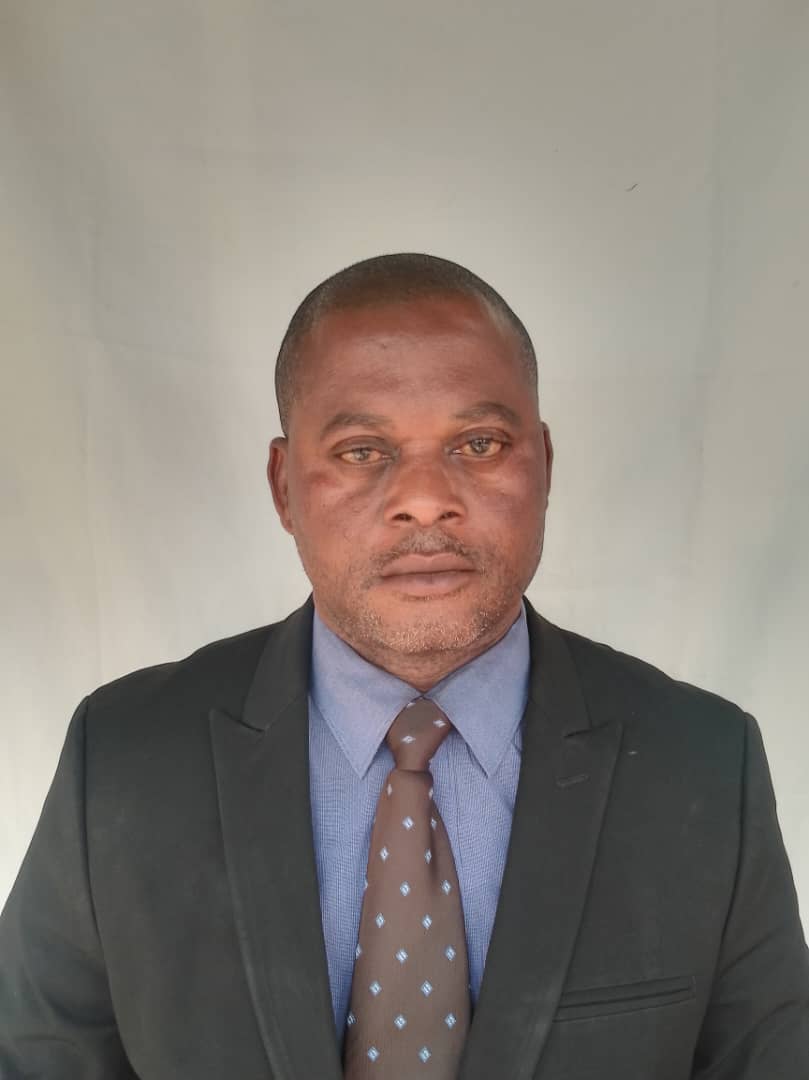
Sam Udekwe is a journalist working in the News and Current Affairs department, Enugu State Broadcasting Service (ESBS) Enugu. He is well trained in all genres of journalistic venture.
Mr Sam read Mass Communication, graduating all with Distinction in National Diploma, Higher National Diploma and Postgraduate Diploma at IMT, Enugu and Madonna University, Okija, Anambra state, as well as M.Sc Mass Communication at National Open University of Nigeria.
He is the immediate past NUJ Chairman, Enugu state.
samowailo@gmail.com