



 Rebutting the Media Backlash Against Governor Nwifuru’s Alleged Threats to the Opposition
By Ike Cletus Ngah
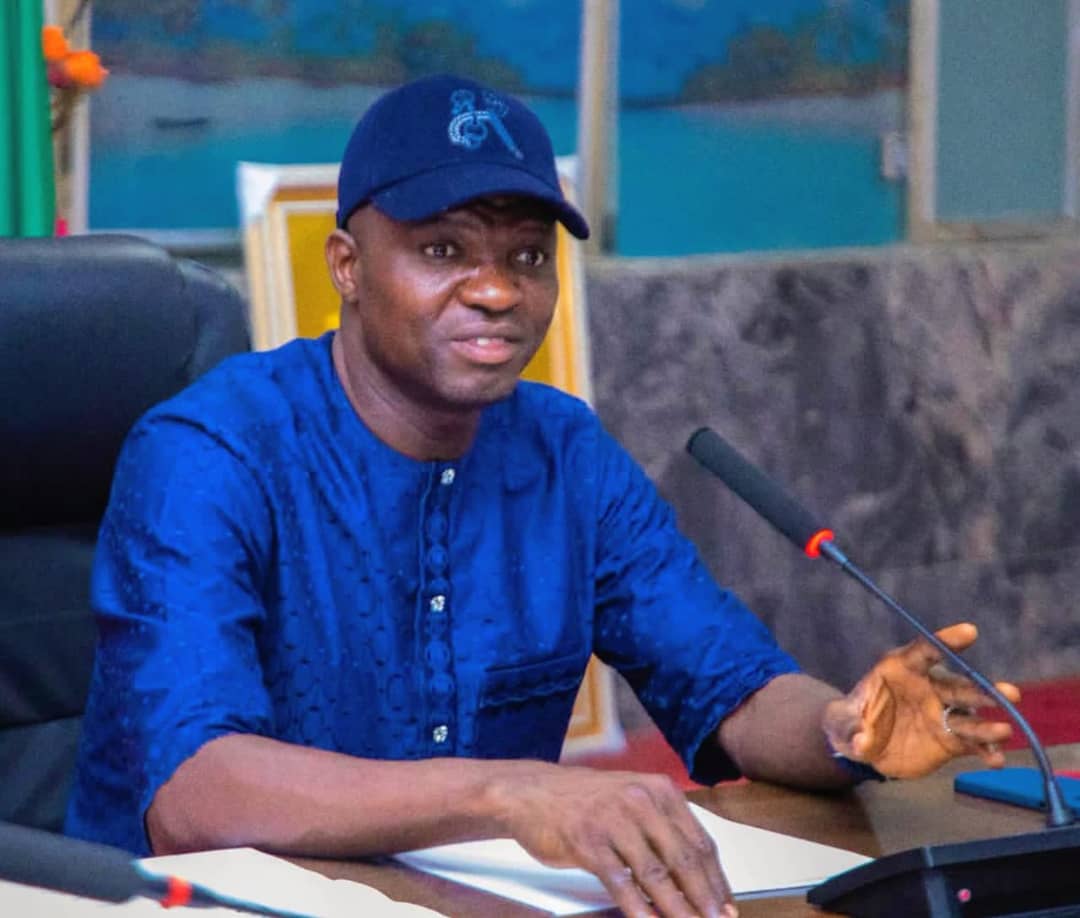
The recent media uproar over comments attributed to Ebonyi State Governor, Rt. Hon. Francis Ogbonna Nwifuru, during the swearing-in of newly elected local government chairmen deserves a more balanced and contextual examination.
While sections of the media and opposition political actors have interpreted the governor’s remarks as a threat against opposition parties ahead of the 2027 general elections, such interpretation should not be allowed to become a substitute for the broader political context in which the statement was made.
Governor Nwifuru was speaking as the leader of the ruling All Progressives Congress (APC) in Ebonyi State to newly elected council chairmen, urging them to defend the political interests of their party and work towards retaining the councils in the 2027 elections. He was not announcing the cancellation of elections, outlawing opposition parties or asking security agencies to suppress the franchise of Ebonyians.
Indeed, politics is inherently competitive. Every political party and political leader has the legitimate responsibility of mobilizing supporters, defending its political territory and working to win elections. It would therefore be misleading to portray every forceful political statement made during partisan mobilization as an existential threat to democracy.
Political rhetoric, particularly during an intensely competitive electoral season, must still be distinguished from an actual directive to commit violence or violate the law. This distinction is important.
There is, so far, no evidence in the reported remarks that Governor Nwifuru ordered his supporters to physically attack opposition members, prevent them from campaigning or stop citizens from voting for candidates of their choice.
Politics is not a tea party affairs, it is quite competitive and requires serious commitment from contenders to deliver their preferred candidates during elections. One of the major flaws in the current backlash is the tendency to interpret every declaration of political dominance by the ruling party as evidence of an intention to suppress the opposition. For instance:
If a governor says his party will defeat the opposition, that is politics;
If a governor directs elected party members to work hard to win their constituencies, that is politics;
If a governor warns political appointees that failure to deliver electoral support could have political consequences, that is a matter that may be debated politically and legally, but it should not automatically be described as a plan to eliminate opposition politics.
The proper question should be whether government institutions are actually being used to deny opposition parties their constitutional rights. That is where criticism should be evidence-based.
Notably, the opposition parties in Ebonyi State have always been given a level playing field to organize, criticize the government, mobilize supporters and prepare for the 2027 elections. If there are specific instances of intimidation, assault, unlawful detention or denial of political rights, those allegations should be documented and subjected to investigation by the appropriate authorities.
His administration has placed considerable priority on education, healthcare, agriculture, infrastructure and human-capital development. Consequently, the 2027 contest should provide an opportunity for Ebonyians to compare the records, programmes and policy alternatives of the APC and opposition parties.
That is what democracy is supposed to produce. If the opposition believes the governor has performed poorly, it should present its own alternative. If it believes the government has failed in particular sectors, it should provide evidence and challenge the administration on those issues.
Ultimately, the strength of Governor Nwifuru’s administration should not be measured by how loudly it speaks against its political opponents, but by how convincingly it can defend its record before the people.
The 2027 election should therefore be a contest of ideas, records and popular support—not a contest of threats, accusations and sensational headlines.
Hon Ike Cletus Ngah is the
SA, Internal Security, Ivo.

EDITOR
Sam Udekwe is a journalist working in the News and Current Affairs department, Enugu State Broadcasting Service (ESBS) Enugu. He is well trained in all genres of journalistic venture.
Mr Sam read Mass Communication, graduating all with Distinction in National Diploma, Higher National Diploma and Postgraduate Diploma at IMT, Enugu and Madonna University, Okija, Anambra state, as well as M.Sc Mass Communication at National Open University of Nigeria.
He is the immediate past NUJ Chairman, Enugu state.
samowailo@gmail.com