




 2027: NDC, Social Media Shenanigans And The Southeast
By Samson Ezea
In politics, social media popularity is not necessarily a reflection of electoral strength, just as public enthusiasm for a presidential candidate does not automatically translate into victory at the polls.
Elections are won through a combination of political structures, grassroots mobilisation, organisational capacity, candidate availability, strategic alliances and the ability to translate public support into votes.
As Nigeria approaches the 2027 general elections, the unfolding developments surrounding the National Democratic Congress (NDC) raise many important questions about the party’s preparedness, electoral reach and political strategy, particularly in the Southeast.
When an alarm was raised in August 2026 by former presidential adviser, Barr. Okoi Obono-Obla, claiming that the NDC had no governorship candidates in 11 states across the country, the party’s National Publicity Secretary and renowned journalist of international repute, Mr. Osa Director, quickly debunked and dismissed the claim, insisting that the party had placeholders.
He maintained that claims that the party was not fielding candidates in some states were false. His explanation was believed by some, but according to Obono-Obla, the NDC was facing a major electoral setback ahead of the 2027 general elections.
He claimed that the opposition party had failed to field governorship candidates in 11 states, covering 233 local government areas across the country.
Obono-Obla said the provisional list of governorship candidates released by the Independent National Electoral Commission (INEC) in August 2026 indicated that the party had not fielded candidates in Cross River, Borno, Ebonyi, Katsina, Kebbi, Niger, Plateau, Taraba, Yobe, Zamfara and Akwa Ibom states.
The former presidential aide said the 233 affected local government areas represented about 30.1 per cent of Nigeria’s 774 LGAs.
He argued that the development could weaken the party’s grassroots mobilisation and polling-unit coverage as it prepared for the presidential election.
Obono-Obla also said that the NDC had filed candidates for only about 70 per cent of the National Assembly positions, leaving approximately 141 federal constituencies without candidates for the House of
Representatives.
“On August 29, 2026, INEC displayed provisional governorship candidates. By August 31, field checks confirmed NDC has no candidate in 11 states,” Obono-Obla said.
“To win President, you need 25% in 24 states. With 11 states having no structure (233 LGAs), you must get 25% in states where you have no coordinators.
“NDC enters the triple election of Jan 16, 2027, with 233 LGAs (30.1% of Nigeria) and 141 federal constituencies blank.
“The failure of 2026 filing cannot be cured by substitution. It will cost 4-6 million votes on Jan 16, not from lack of popularity, but from lack of ballot presence and agent coverage.”
In his defence of the party and rejection of the claims, Osa Director said: “Those are all lies from the pit of hell. If the All Progressives Congress (APC) want to win the election, they don’t have to win the election through propaganda that they cannot defend.”
He added: “In the least situation of some of these cases, we have placeholders. You don’t have to lie about that. The electoral body has allowed for that.”
According to him, the controversy should be settled by INEC’s official records rather than reports from partisan politicians.
While the claims, counterclaims and rebuttals between Osa Director of the NDC and former presidential adviser Okoi Obono-Obla may eventually fade from public memory, considering how easily Nigerians suffer from selective amnesia, a subsequent legal development has brought the issue of political parties’ electoral preparedness into sharper focus.
It would be recalled that on September 24, 2026, the Supreme Court delivered a landmark judgment on political party membership registers.
The judgment restored the provisions of the Electoral Act 2026 that restrict participation in party primaries to members whose names appear on membership registers submitted to INEC within the statutory period.
Specifically, it restored Sections 77(5), 77(6), 77(7) and 84(2) of the Electoral Act 2026, which the Court of Appeal had declared unconstitutional in July.
Under Section 77(5), only party members whose names appear on the membership register submitted to INEC within the prescribed period are eligible to participate in party primaries, congresses and conventions.
Section 77(6) requires political parties to use the submitted register for their primaries, while Section 77(7) provides that a party that fails to submit its register within the stipulated period is ineligible to field candidates.
Following the Supreme Court judgment, INEC released the final list of governorship and House of Assembly candidates across the states. Lo and behold, Obono-Obla’s earlier claims and analysis concerning the challenges facing the NDC ahead of the 2027 general elections appeared to have gained further significance.
To further buttress Obono-Obla’s claims and corroborate the concerns surrounding INEC’s published list, a renowned Adamawa-born politician, Dr. Umar Addo, during a recent live appearance on Arise TV’s political programme, said that the NDC had not fielded governorship candidates in 11 states.
According to him, following the Supreme Court judgment, INEC added three more states, Kano, Kaduna and Nasarawa, where the NDC would not have governorship candidates. This, he said, brought the total to 14 states, representing more than one-third of the states in the federation.
He further stated that the NDC had not fielded candidates in approximately 140 National Assembly seats.
“This shows that NDC isn’t ready for 2027 and should step aside, leaving ADC and APC to battle it out in the elections,” he said.
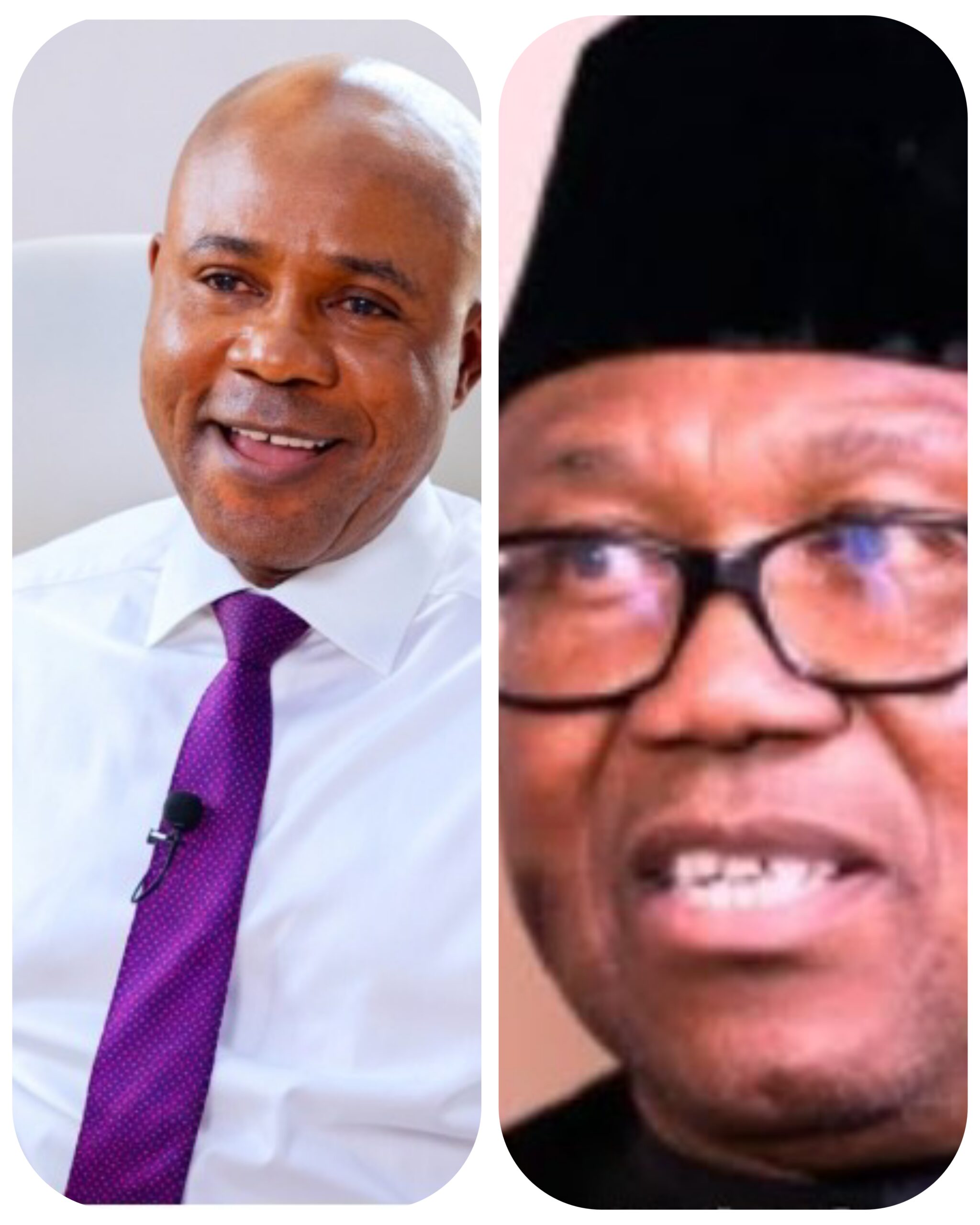
Since Dr. Addo made this declaration and INEC published its final list of governorship candidates, neither the NDC National Publicity Secretary, Osa Director, nor the party’s National Leader, Seriake Dickson, its presidential candidate, Mr. Peter Obi, or his running mate, Alhaji Rabiu Kwankwaso, has publicly countered, refuted or debunked the disclosure with incontrovertible evidence.
Instead, the party’s leaders and supporters have continued to engage in social media exchanges that appear designed to downplay the implications of the controversy before Nigerians.
Rather than directly addressing the absence of candidates in 14 states, the party’s geographical spread, its organisational presence and its capacity for grassroots mobilisation across the country, NDC leaders and members appear more occupied with winning arguments and propagating falsehoods on social media platforms.
The erroneous belief that the popularity of their presidential candidate alone can guarantee victory in presidential, governorship and other elective contests in 2027 general elections is a questionable assumption in a political system where elections require effective organisation, widespread participation and coordinated mobilisation.
Perhaps NDC members and candidates have forgotten that a tree cannot make a forest. If the popularity of a single candidate could not independently guarantee electoral success for all Labour Party candidates in the 2023 general elections, what makes NDC members and supporters believe that the same approach will automatically produce a different outcome in 2027, when the political landscape, alliances and organisational structures have continued to evolve, placing the ruling APC in a vantage position?
The NDC’s challenges raise legitimate questions about its ability to compete effectively across the country’s political landscape. These challenges deserve more than social media arguments, partisan declarations or dismissive responses.
The NDC’s social media activities, particularly in the Southeast, where its presidential candidate appears to enjoy considerable support, have increasingly become a subject of political controversy.
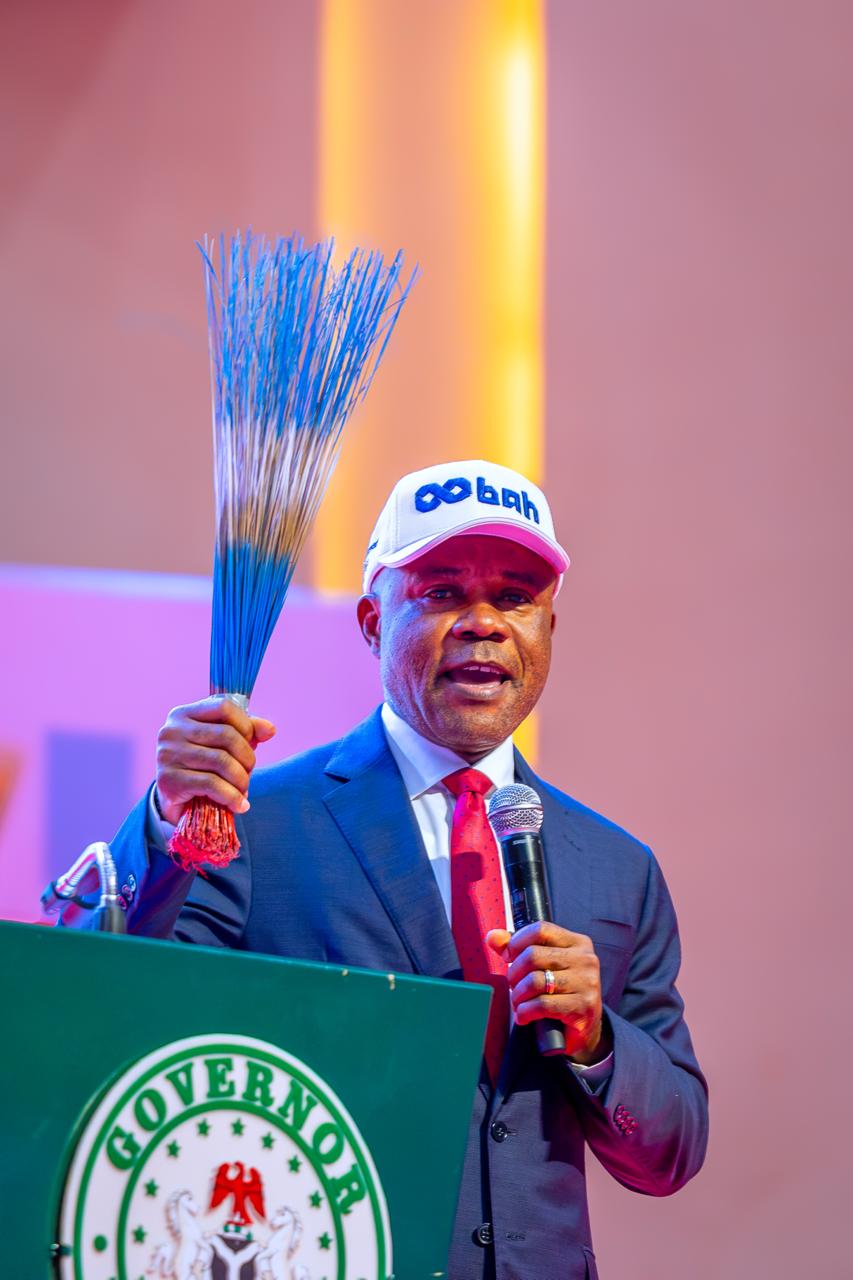
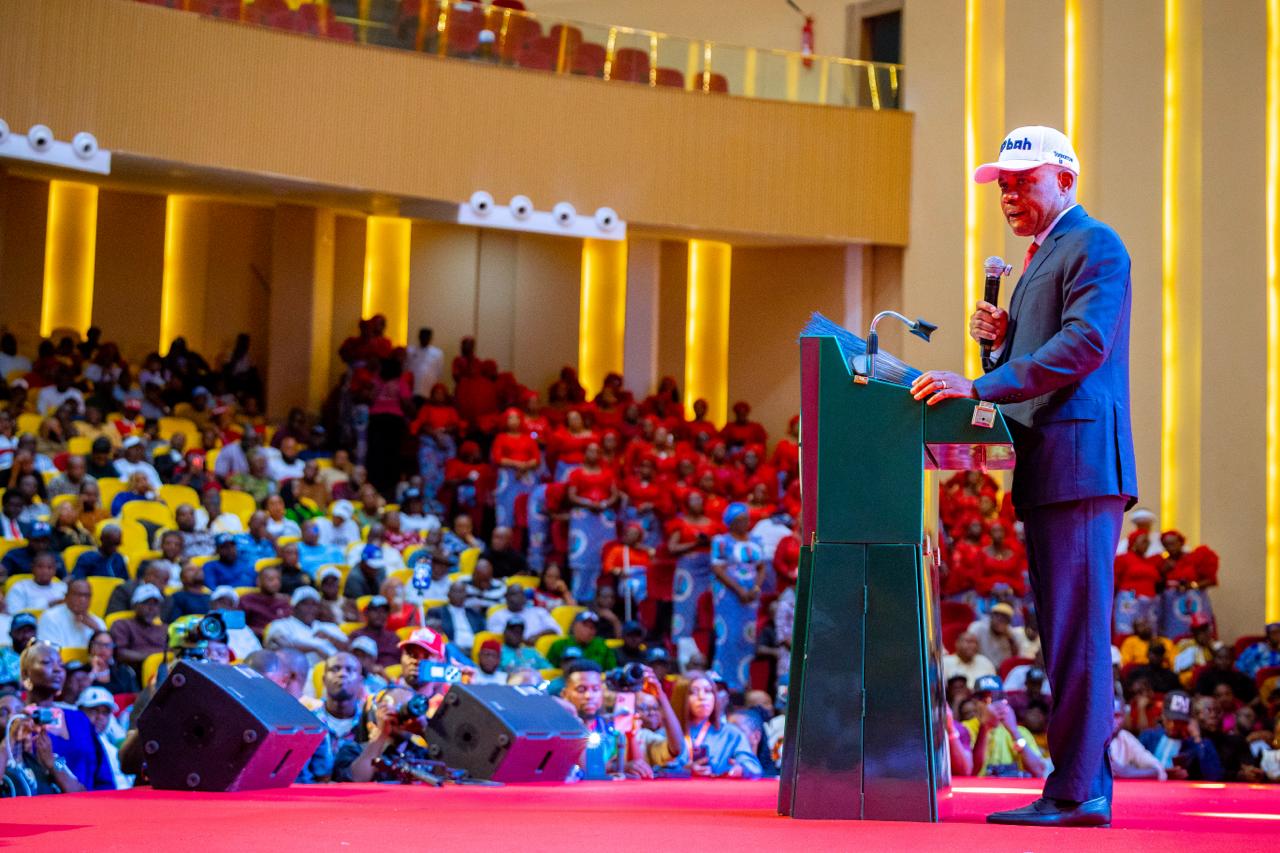
If it is not social media reports alleging the unverified killing of an NDC member in Enugu, it is an allegation that Governor Peter Mbah sought to prevent the party’s presidential candidate from holding a town hall meeting in Enugu State.
This is despite Governor Mbah’s public statement exonerating himself from the allegation and a statement issued by the owners and management of the event centre, Amadeo, explaining how the NDC misled them into securing the venue through a proxy and under false pretences.
In a politically charged environment, allegations of this nature demand careful investigation, credible evidence and responsible public communication.
Political parties and their supporters have a duty to distinguish verified facts from speculation, particularly when such claims could inflame tensions, mislead the public and malign character.
The unfolding drama surrounding the NDC’s electioneering activities raises more questions and suspicions about the party’s communication strategy and its approach to political engagement.
Many have drawn parallels between the NDC’s current trajectory and the Labour Party’s political experience in the Southeast during the 2023 general elections.
The argument is that the Labour Party’s extraordinary popularity at the time created a wave of political enthusiasm that drew support from different sections of the electorate, including some members of the then-ruling Peoples Democratic Party (PDP) in Enugu State who worked covertly against their party during the elections.
However, following their electoral victories, the majority of Labour Party candidates defected to the PDP, then led in Enugu State by Governor Peter Ndubuisi Mbah.
For those making this comparison, the lesson is that electoral enthusiasm, social media visibility and popular slogans do not always translate into lasting political loyalty or sustained party organisation.
In this context, they see similarities between the NDC of 2027 and the Labour Party of 2023. They are like six and half a dozen. Whether that comparison is entirely justified remains a matter of political interpretation, but the underlying question is important: Can a wave of public enthusiasm be sustained without the structures, candidates and grassroots organisation required to compete effectively across the country?
For the Southeast, this question is particularly significant.
The region’s long-term political interests cannot be separated from its participation in national political processes, its representation in key institutions and its ability to build strategic relationships across the federation.
Consequently, political decisions should be informed by a careful assessment of candidates, party structures, policy commitments and the potential implications of electoral choices.
The experience of 2023 also demonstrates the importance of looking beyond immediate political excitement. Voters and political stakeholders have legitimate reasons to examine whether the promises, alliances and expectations generated during campaigns translate into lasting representation and tangible benefits after elections.
As the 2027 general elections approach, the NDC faces questions that cannot be resolved by social media popularity and validation alone. The controversy over its governorship and National Assembly candidates, the implications of the Supreme Court judgment and the party’s organisational reach require clear explanations supported by verifiable electoral records.
The party’s leadership has an opportunity to address these concerns directly, clarify the status of its candidates and demonstrate the strength of its structures across the federation.
For the people of the Southeast, particularly Enugu State, the lesson is not to surrender independent political judgment to online enthusiasm, sensational claims or the bandwagon effect surrounding any presidential candidate.
The region deserves a political conversation anchored in facts, accountability, representation and long-term interests.
Every political party should be assessed on its programmes, organisational capacity, candidates, policy commitments and ability to deliver meaningful representation to the people.
The excitement surrounding a candidate may dominate headlines and social media conversations today, but the consequences of electoral decisions extend far beyond the campaign season. That is why the people must distinguish between popularity and preparedness, rhetoric and reality, as well as online influence and the practical demands of democratic participation.
In the final analysis, the Southeast must not allow the excitement of the moment to overshadow the demands of the future. The region’s political destiny should be shaped by informed choices, strategic engagement and a clear understanding of the realities of Nigeria’s electoral system.
The 2027 elections present an opportunity to reflect on the lessons of 2023 and make decisions that protect the region’s long-term interests within the Nigerian federation.
Ezea writes from Independence Layout, Enugu State.

EDITOR
Sam Udekwe is a journalist working in the News and Current Affairs department, Enugu State Broadcasting Service (ESBS) Enugu. He is well trained in all genres of journalistic venture.
Mr Sam read Mass Communication, graduating all with Distinction in National Diploma, Higher National Diploma and Postgraduate Diploma at IMT, Enugu and Madonna University, Okija, Anambra state, as well as M.Sc Mass Communication at National Open University of Nigeria.
He is the immediate past NUJ Chairman, Enugu state.
samowailo@gmail.com