






 State Police: Mbah Seeks Financial Autonomy, Technology-Driven Policing, Dismisses Fears of Abuse
Governor Peter Mbah of Enugu State has advocated financial autonomy for proposed state police services and massive investment in modern security technology, insisting that any legal framework establishing state policing must balance national standards with local capabilities and decision-making.
Mbah stated this on Thursday during a town hall meeting themed, “Building a National Consensus for State Police and National Security,” organised by Arise News in Abuja.
The governor stressed that adequate funding and technological advancement are indispensable to the success of state police services, noting that subnational governments must be equipped with the resources required to tackle insecurity effectively.
According to him, the proposed State Police Service Commission should enjoy a first-line charge on the Consolidated Revenue Fund to guarantee financial independence and operational efficiency.
“The importance of funding the state police system effectively cannot be overemphasised. Having a State Police Service Commission with a first-line charge on the Consolidated Revenue Fund is in order.
“Many institutions at the state level, including the judiciary and legislature, already enjoy first-line charge. The key issue is ensuring adequate funding to sustain the state policing system,” he said.
Drawing from Enugu State’s experience, Mbah recalled that his administration inherited a dire security situation in 2023, with nightlife virtually non-existent, several parts of the state capital under siege, economic activities paralysed on Mondays due to illegal sit-at-home orders, and students unable to sit for important examinations.
“We came into office with a clear mandate to eradicate poverty, grow the economy exponentially and make Enugu State the preferred destination for business, living and investment.
“We quickly realised that without addressing insecurity, these objectives would remain unattainable. Consequently, we invested heavily in technology by establishing a Safe City Surveillance System equipped with Artificial Intelligence-enabled CCTV cameras, as well as static and mobile surveillance devices. These interventions come at enormous costs,” he stated.
The governor explained that his administration complemented the technological investments by establishing the Distress Response Squad, DRS, to guarantee swift responses to security breaches.
“As a governor, you need immediate action because security matters are measured in minutes. You must possess the capability to prevent crimes before they occur and, where breaches happen, respond swiftly.
“The Enugu experience has shown that these measures enabled us to reduce violent crimes by more than 90 per cent,” he added.
Mbah noted that states already shoulder a significant burden in financing security infrastructure and technology, adding that Enugu has also established a unified communication system linking all security agencies operating in the state.
“Our Command and Control Centre accommodates all security agencies, including the police, the Army and the Department of State Services, DSS. They all operate on a common communication platform,” he said.
On the legal framework for state policing, the governor advocated a constitutional provision that guarantees the establishment of state police while leaving operational details to an Act of the National Assembly, thereby allowing future reforms without the cumbersome process of constitutional amendment.
“In amending the Constitution, we must ensure that it is not unnecessarily verbose. There should be provisions that permit future reforms if adjustments become necessary after implementation,” he said.
Addressing concerns that governors could abuse state police structures, Mbah dismissed such fears, arguing that governors are elected for limited tenures and should be granted sufficient operational authority to deliver on their security responsibilities.
“There is this notion that governors are likely to abuse state police and that their powers should therefore be significantly curtailed.
“But nobody remains governor forever. One day, we will all leave office and become ordinary citizens again. What is important is ensuring that governors are given adequate operational authority because you cannot set performance targets for someone without providing the necessary control to achieve the desired outcomes,” he concluded.
EDITOR
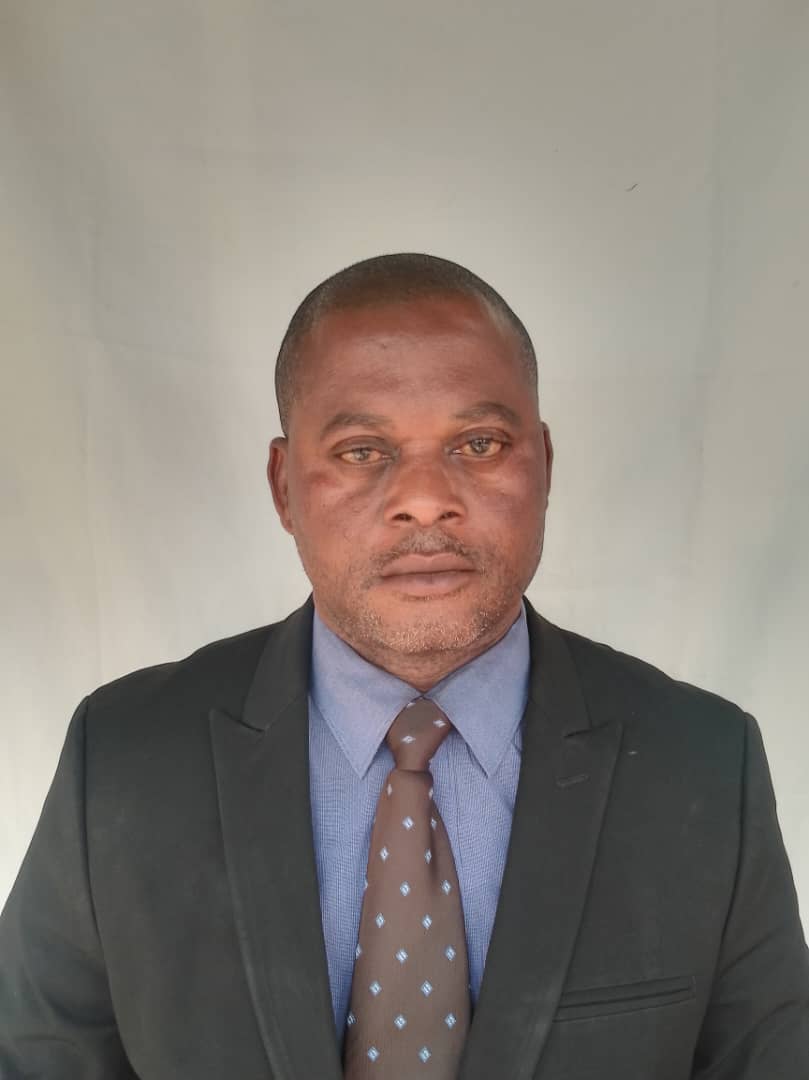
Sam Udekwe is a journalist working in the News and Current Affairs department, Enugu State Broadcasting Service (ESBS) Enugu. He is well trained in all genres of journalistic venture.
Mr Sam read Mass Communication, graduating all with Distinction in National Diploma, Higher National Diploma and Postgraduate Diploma at IMT, Enugu and Madonna University, Okija, Anambra state, as well as M.Sc Mass Communication at National Open University of Nigeria.
He is the immediate past NUJ Chairman, Enugu state.
samowailo@gmail.com