






 Nri Monarchist Decries ‘Cultural Amnesia’ as Enugu Hosts Maiden Igbo Origin Lecture
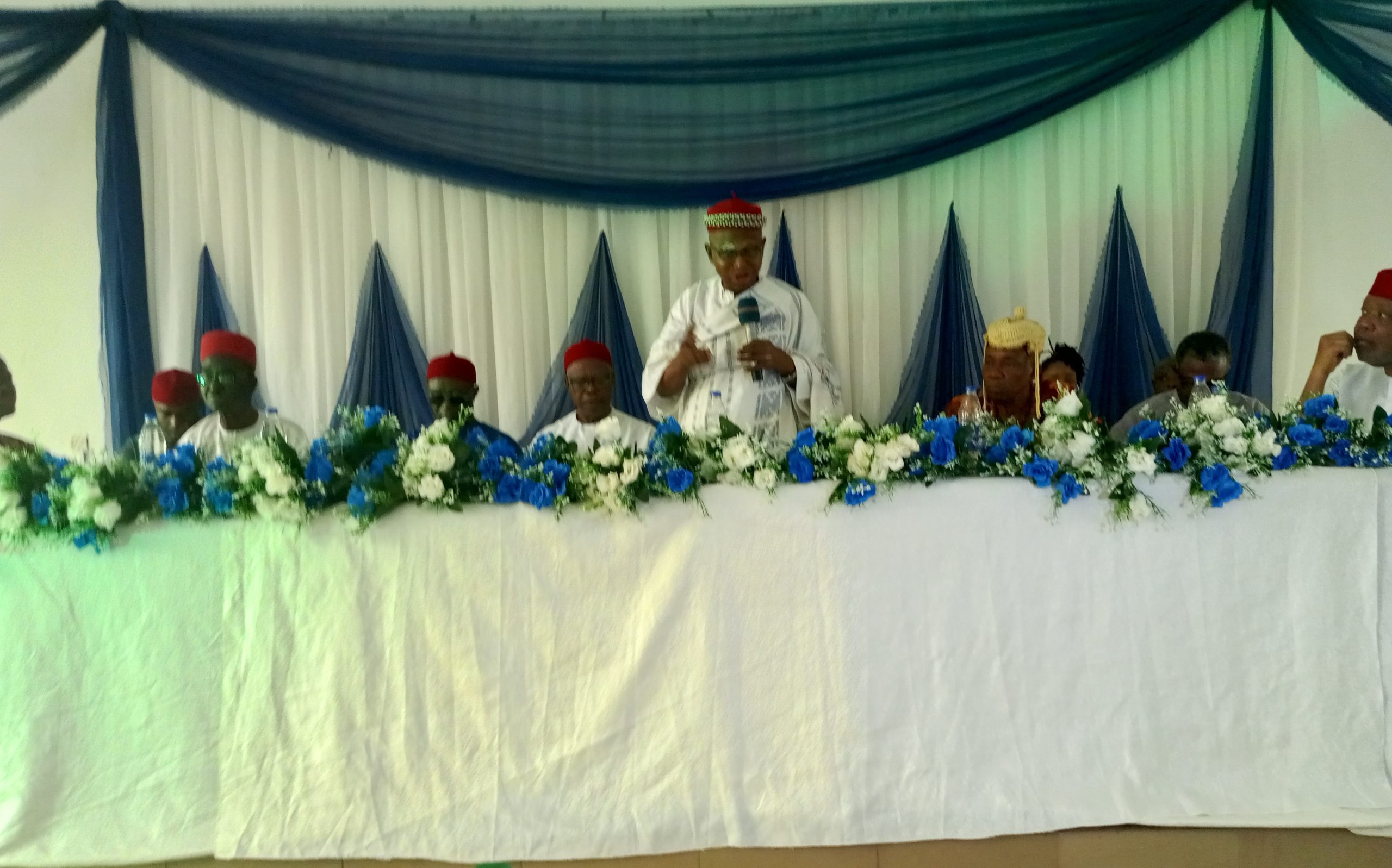
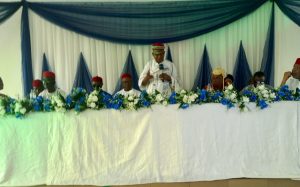
A powerful call for the restoration of Igbo civilizational pride echoed through the auditorium of the Enugu Sports Club on Thursday as Prince Chukwuemeka Onyesoh, Oba Agbalanze na Nri and Leader of the Club’s Chess Conclave, delivered a hard-hitting keynote address at the Maiden Annual Lecture on Igbo Origin: Facts and Fiction.
Speaking before a distinguished audience of academics, jurists and cultural custodians, Prince Onyesoh warned that the Igbo nation risks “permanent cultural dislocation” if its leaders continue to neglect historical truths about Igbo origins, achievements and ancient institutions.
“A People Without History Are Like a Tree Without Roots”
In a sweeping preamble anchored on global historical reflections, he referenced Marcus Garvey and George Santayana to stress the indispensable role of history in nation-building. He drew parallels between Igbo proverbs, modern medical practice, and historical warnings, arguing that societies which ignore their past inevitably repeat avoidable mistakes.
He linked this to what he described as recurring political miscalculations in Nigeria, referencing the 1942 Islamic conversion demand cited in both Obafemi Awolowo’s works and his own publications. While he declined to dwell on politics, he said such historical warnings—ignored by Igbo leaders—continue to shape Nigeria’s contemporary crises.
How Igbo Leadership “Abandoned Its Cultural Compass”
Prince Onyesoh traced what he called the “cul-de-sac of Igbo cultural affairs” to the systematic neglect of the ancient Nri theocratic monarchy—an institution he argued predates all kingships in Nigeria and once unified Igbo land under a pacifist and human-rights-oriented civilization.
He identified twelve surviving legacies of Nri civilization including the Igbo market days, the 13-month lunar calendar, the yam cult, monotheistic worship without human sacrifice, age-grade systems, title-taking traditions, and a peace-based governance philosophy.
He accused late Dr Nnamdi Azikiwe—despite his acknowledged anthropological expertise—of initiating the modern sidelining of the Nri throne. According to him, Azikiwe acknowledged the supremacy of the Eze Nri in 1956 while moving the Recognition of Chiefs motion but later bypassed the throne in appointments to the Eastern Nigeria House of Chiefs.
“That single political reversal,” he argued, “gave room for missionary propaganda that ‘Igbo enwe eze’ (Igbos have no king), a cliché which has since emboldened other Nigerian scholars to dismiss Igbo civilization as a mere village-based system.”
Study Funded by Dutch Embassy Also Faulted
Prince Onyesoh criticised a 2010 report authored by five Nigerian scholars and funded by the Embassy of the Netherlands, which concluded that the South-East lacked centralised monarchies. He described the report as “unresearched and damaging,” insisting that historical records, archaeological findings and early European documentation contradict such claims.
He lamented that the Igbo are now poorly represented in Nigeria’s National Council of Traditional Rulers because political leaders disregard universally accepted criteria of age, influence and antiquity used across the world to rank monarchies.
“How can a kingship created in 1976 stand side-by-side with the Ooni of Ife (1045 AD) or the Emir of Kano (950 AD) as the voice of Igbo civilization?” he queried.
Igbo Pioneered Iron Smelting Before the World, Speaker Says
Citing archaeological discoveries at Leja in Nsukka, Enugu State, Onyesoh reiterated that Igbo ancestors were smelting iron as far back as 2,000 BCE—five centuries before the acknowledged Southwest Asian Iron Age.
He wondered why this globally significant heritage has not attracted sustained research. “This competes with Egypt’s Old Kingdom in antiquity,” he said.
“We Must Tell Our Story Ourselves”
Concluding, he urged Igbo scholars, professionals and cultural custodians to aggressively document and publicise Igbo historical achievements:
“Ignore the doubting Thomases. Those who half-know and half-don’t are the greatest obstacles to world development.”
He thanked sponsors including Dr. Innocent Ezuma, Prof. Barth Nnaji and Justice Peter Nnanna Chukwudi Umeadi for funding the inaugural lecture.
Anthropologist Counters Claims, Calls for Evidence
In a sharp academic counterpoint, retired UNN professor of Anthropology, Prof. Peter Ezeh, cautioned that many claims about Igbo origins remain speculative. He dismissed assertions of Igbo-Jewish ancestry as lacking scientific grounding, arguing that similarities in cultural practices across global populations do not necessarily indicate historical lineage.
“Most of the presentations are personal opinions,” he said. “We need concrete evidence, not conjectures.”
Justice Umeadi Calls for Igbo Language Digitisation
Chairman of the occasion and former Chief Judge of Anambra State, Justice Peter Umeadi, emphasised the urgency of integrating Igbo into global linguistic technology, especially automatic translation platforms.
He called on academics, researchers and cultural institutions to intensify efforts in tracing and documenting Igbo history for global visibility.
EDITOR
Sam Udekwe is a journalist working in the News and Current Affairs department, Enugu State Broadcasting Service (ESBS) Enugu. He is well trained in all genres of journalistic venture.
Mr Sam read Mass Communication, graduating all with Distinction in National Diploma, Higher National Diploma and Postgraduate Diploma at IMT, Enugu and Madonna University, Okija, Anambra state, as well as M.Sc Mass Communication at National Open University of Nigeria.
He is the immediate past NUJ Chairman, Enugu state.
samowailo@gmail.com