





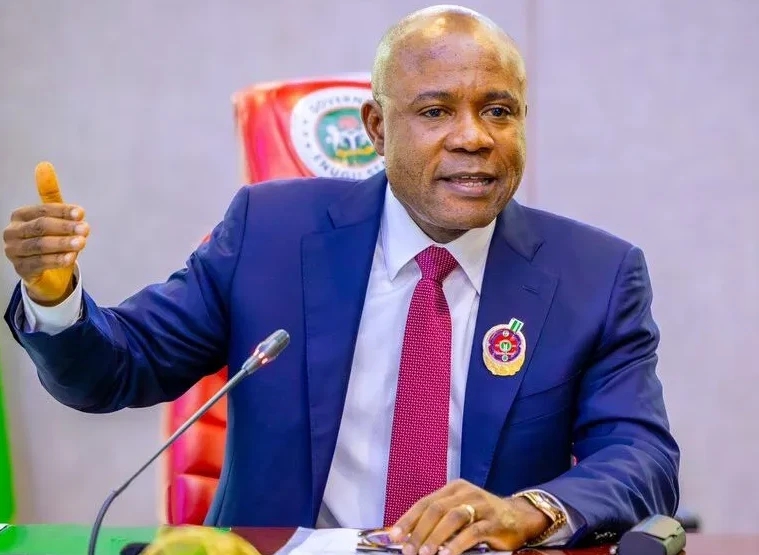
 Three Years of Transformation: Governor Peter Mbah’s Scorecard in Enugu
By Maxwell M. Ngene
Three years ago, when Peter Ndubuisi Mbah assumed office as Executive Governor of Enugu State, expectations were as high as they were cautious. The state was grappling with the triple burden of economic stagnation, deepening insecurity, and infrastructural neglect — challenges that had accumulated across successive administrations and had come to define the people’s weary relationship with government. Few dared to hope for swift transformation. Many had grown accustomed to grand make-believe promises dissolving into the familiar disappointments of Nigerian governance. Yet, three years on, Governor Mbah’s administration has rewritten the narrative in ways that are difficult to dismiss.
From his inaugural address to the people of Enugu State, Mbah declared with characteristic conviction that “Tomorrow is Here”, a phrase that might easily have been dismissed as the rhetorical flourish of a freshly sworn-in politician. Instead, it has proven to be a governing philosophy, a lens through which every policy initiative, every capital project, and every social intervention has been conceived and executed. It is not a slogan posted on billboards alone; it is a commitment carved into the institutions, industries, and communities that his administration has touched.
Industrial Revival: Breathing Life into Enugu’s Economic Soul
Perhaps no dimension of Mbah’s governance has been as symbolically powerful as the revival of industries that had long been consigned to decay. Niger Gas, Hotel Presidential, and Sunrise Flour Mills, once proud emblems of Enugu’s industrial ambition, later reduced to rusting monuments of neglect, now hum with renewed commercial activity. Their resuscitation is not merely an economic statistic; it is a statement of political will and a source of renewed pride for a people who had watched the state’s industrial heritage abandoned and allowed to crumble before their very eyes.
More strategically significant is the commissioning of the Haier Factory, a $20 million assembly plant for the manufacturing of laptops, smartphones and their repair spare parts. In a state historically associated with coal mining and civil service, this huge transformative facility marks a decisive pivot toward the knowledge economy. Enugu is repositioning itself not simply as a rehabilitation story but as a forward-looking technology hub, a destination for innovation-driven investment that speaks to the aspirations of its youthful population.
Education Reimagined: Classrooms for a Digital Generation
If industry speaks to economic survival, education speaks to civilisational ambition. Mbah’s administration has undertaken one of the most sweeping educational reforms in Enugu’s recent history through the Smart Green Schools initiative, now operational across most of the 260 wards of the state. These are not merely refurbished classrooms; they are brand-new laboratories of the future, a place where children engage with robotics, artificial intelligence, and digital technologies. Each pupil is equipped with a personal tablet, and daily school meals address the nutritional dimension of learning that too often goes ignored in policy discourse.
The implications are generational. Children in rural wards who might never have seen or used a computer are now exploring coding platforms and digital problem-solving tools. This bold initiative bridges the digital divide not as a future aspiration but as a present reality preparing Enugu’s next generation for the demands of a global economy that will not wait for stragglers.
Mobility and Connectivity: A State on the Move
Transport infrastructure has long been both a metaphor and a measure of governance quality in Nigeria. On this front, the Mbah administration has invested with visible commitment. The introduction of compressed natural gas (CNG)-powered buses, equipped with Wi-Fi connectivity, has eased commuting between Nsukka and Enugu, offering passengers a glimpse of the modern, liveable city that the governor envisions. Architecturally impressive bus terminals at Abakpa, Nsukka, and Garki further anchor this vision in physical form, turning transit points into civic landmarks.
Most ambitious of all is Enugu Air, the state-owned airline that has launched with an initial fleet of six aircraft. A state airline is an audacious proposition at any time, but in a Nigerian political environment habitually sceptical of government-run commercial enterprises, Enugu Air carries the weight of both symbolism and strategic intent. Its success will be watched closely, both as a transport solution and as a test of the administration’s capacity to manage complex ventures beyond the political arena.
Healthcare for All: From the Ward to the Specialist Theatre
Governor Mbah’s healthcare vision operates on two complementary axes: breadth and depth. The establishment of Primary Health Centres in every ward ensures that the most basic healthcare is no longer the exclusive preserve of the rich in urban areas. Communities that once relied on patent medicine stores as their first port of medical call now have functional health facilities within reach. Simultaneously, the construction of a 300-bed Super Specialist Hospital signals an ambition that extends beyond basic care into medical excellence. This is an institution designed not only to serve Enugu’s residents but to attract medical tourism and reduce the costly haemorrhage of Nigerians seeking specialist treatment abroad.
Security Restored: Reclaiming the Night
No governance achievement carries greater weight in the daily lives of ordinary citizens than security. Enugu, like much of the South-East, had suffered a period of debilitating insecurity, a situation that severely curtailed economic activities, dampened investor confidence, inflicted fear of untimely deaths into the spines of ordinary citizens and cast a pall over civic life. The establishment of a state-of-the-art Command and Control Centre in the premises of the Enugu State Government House, enabling real-time surveillance and coordinated security response, has been central to the administration’s counteroffensive against criminal networks.
The results have been visible, tangible, and felt. Night markets, once abandoned as too dangerous to patronise, now thrive again. Residents move with a freedom they had almost forgotten. This restoration of public safety is not a rhetorical claim; it is attested by the renewed commercial energy visible in the state’s markets and streets. Security, in this administration, has been treated not as a luxury but as the prerequisite upon which all other development rests.
Agriculture and Rural Development: Connecting the Farm to the Market
In a state where significant portions of the population derive their livelihoods from farming, the Mbah administration’s investment in agricultural modernisation carries profound economic implications. The introduction of a tractor assembly plant signals a commitment to mechanised, large-scale agriculture, a departure from the subsistence-level farming that has historically characterised rural Enugu. Complementing this, new road construction projects are steadily linking rural farming communities to urban markets, addressing the perennial problem of produce spoilage and the chronic inability of smallholder farmers to access buyers at fair prices.
Assessment: A Record Defined by Ambition and Accountability
A balanced assessment of Governor Mbah’s three years on the saddle cannot ignore the challenges that persist. Infrastructure projects of this scale inevitably carry implementation risks; promises of industrial revival require sustained private sector confidence to bear lasting fruit; and managing a state airline, specialist hospital, and a digital education revolution simultaneously demands institutional depth that must be continually cultivated and resourced. Critics who point to gaps and unmet targets are not wrong to do so; that is the function of democratic accountability.
Yet the overall arc of this administration is undeniable. In sector after sector – education, health, industry, transport, security, and agriculture – Enugu is making the desired progress. The pace may be contested; the direction should not be. Governor Peter Mbah has chosen to govern as though tomorrow genuinely matters, deploying the instruments of state not as patronage tools but as levers of structural transformation. For a state that had grown accustomed to inertia dressed up as governance, that choice is in itself truly historic.
Three years on, the mantra “Tomorrow is Here” has earned its credibility. Tomorrow, for Enugu, is no longer a consolation deferred to some indefinite future. Under Mbah’s watch, it is arriving – imperfect, contested, and still incomplete, as all genuine transformation must be, but arriving, nonetheless.
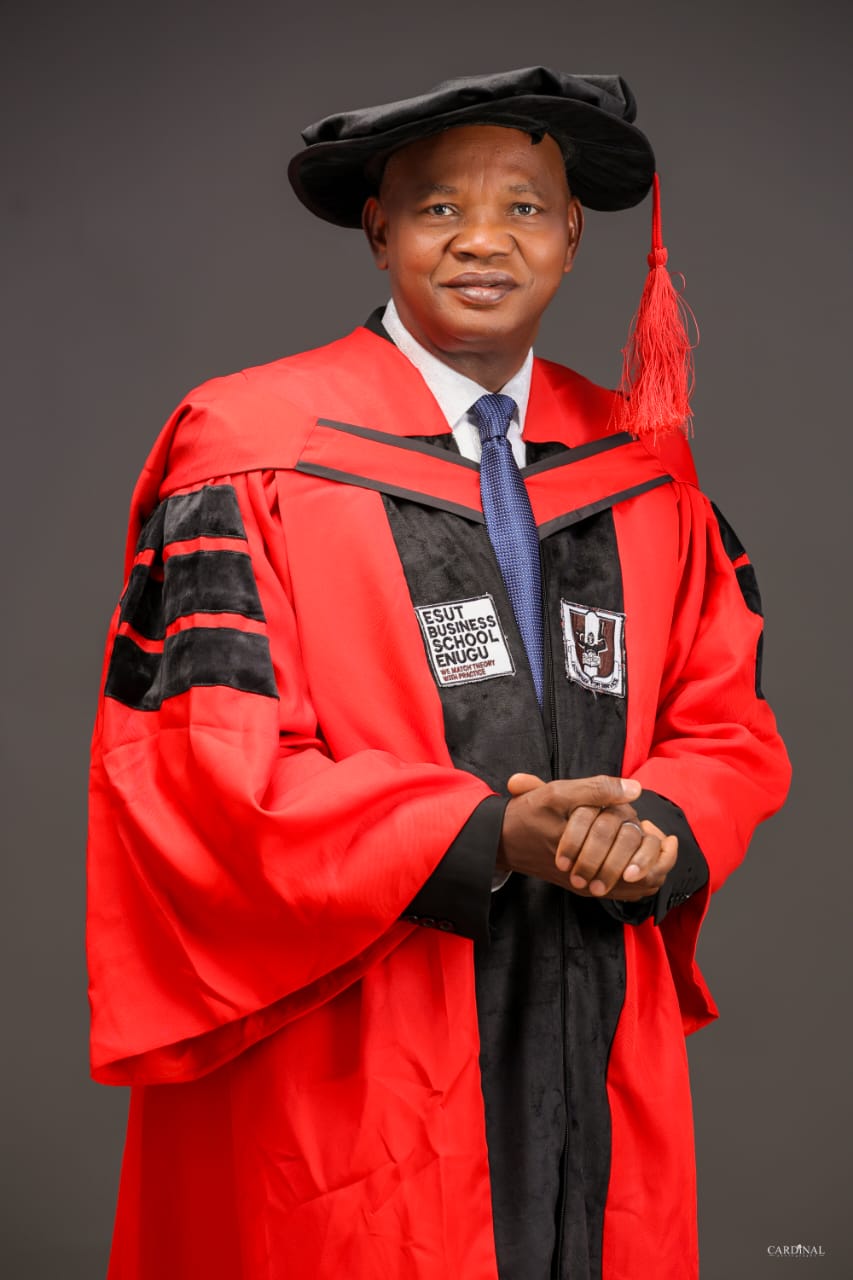
Maxwell M. Ngene, PhD is a Senior Lecturer and Postgraduate Programmes Coordinator in the Department of Mass Communication, Enugu State University of Science and Technology (ESUT), and a media analyst and public affairs commentator based in Enugu.
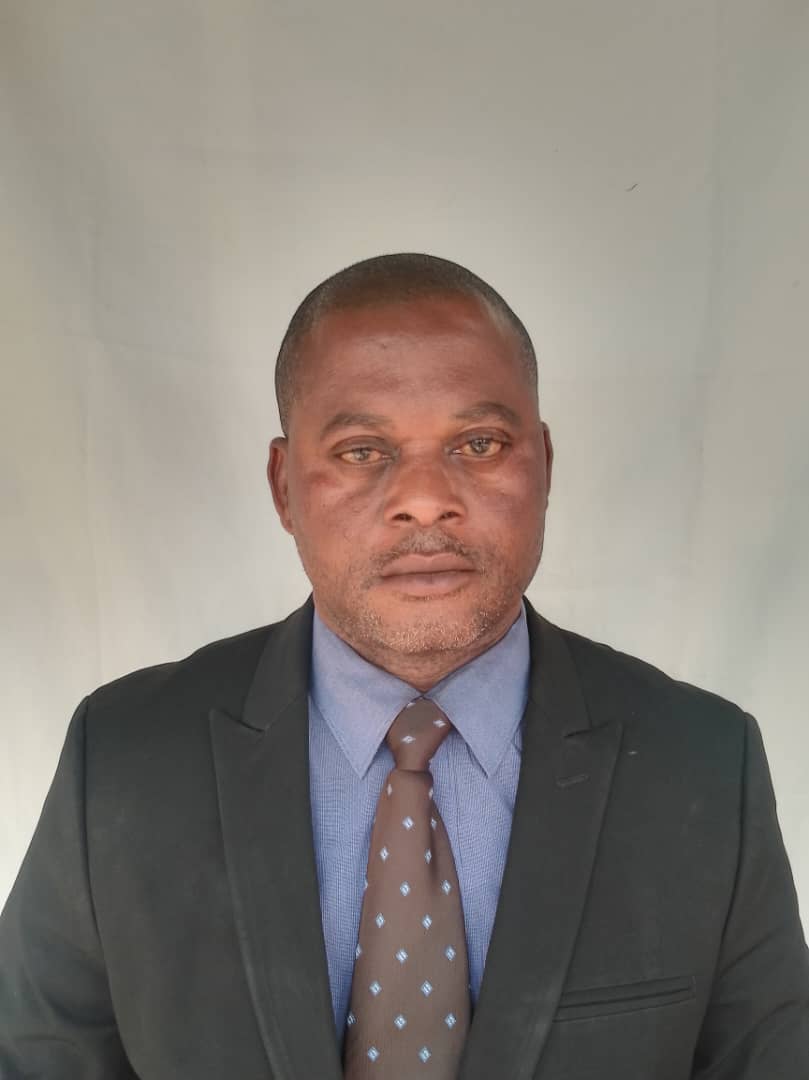
EDITOR
Sam Udekwe is a journalist working in the News and Current Affairs department, Enugu State Broadcasting Service (ESBS) Enugu. He is well trained in all genres of journalistic venture.
Mr Sam read Mass Communication, graduating all with Distinction in National Diploma, Higher National Diploma and Postgraduate Diploma at IMT, Enugu and Madonna University, Okija, Anambra state, as well as M.Sc Mass Communication at National Open University of Nigeria.
He is the immediate past NUJ Chairman, Enugu state.
samowailo@gmail.com