
Beyond Prayers: When Will Nigeria’s Faith Finally Produce Works?
By Maxwell Menkiti Ngene
Nigerians are, by every credible measure, among the most fervently religious people on the face of the earth. From the pulsating streets of Lagos, Enugu, Port Harcourt to the ancient walled precincts of Kano, and Sokoto, faith is not merely a matter of private conviction, it is the very atmosphere of national life. Nigerian churches and mosques overflow their walls on weekends and weekdays alike. Schools inaugurate the learning day with hymns or Qur’anic recitation. Government functions from the lowliest local government council sitting to the grandest session of the Federal Executive Council open with elaborate invocations drawn from both Christian and Muslim best traditions. Even our National Anthem, that solemn collective voice of the republic, is itself a prayer: “O God of creation, direct our noble cause.” Public holidays bend, again and again, towards religious observance. State governors declare days of fasting and prayer when crises overwhelm their administrative capacity. Bus drivers invoke the Blood of Jesus before turning their ignitions. Market women commit their wares and their fortunes to God Almighty before the first customer arrives. No dispassionate observer can accuse Nigerians of indifference to God. We pray loudly, noisily, consistently, comprehensively, and without ceasing three hundred and sixty-five days of every year.
Yet the results of this extraordinary national piety mock, with remorseless consistency, the devotion that produced them. Policemen are seen on a daily basis collecting bribes in full public glare. Police stations in the country still display the cynical fiction that “Bail is Free,” while every citizen of adult understanding knows actually that it is not true. We pray against corruption in the morning and facilitate it in the afternoon through the quiet bribe tendered for a passport, the inflated invoice submitted for a government contract, the unofficial levy extracted at the checkpoint before any service is rendered. We cry to God for security of our nation while shielding known criminals in our communities and heaping celebrations upon politicians who have looted the public treasury with both hands, rationalising our complicity in the convenient language of ethnic solidarity: “It is our turn.” We sing of peace and unity in our national anthem and our church choirs and our mosque congregations, then vote with our stomachs and defend ethnic champions whose records of governance are, by any objective standard, catastrophic. This is the uncomfortable, irreducible truth that no amount of devotional noise can obscure: Nigeria is not suffering from an insufficiency of prayer. Nigeria is suffering from a dangerous and perhaps deliberate disconnection between faith and action – a national habit of mistaking religious performance for moral seriousness, and spiritual volume for developmental progress.
Both Christianity and Islam, the two traditions that together claim the overwhelming majority of Nigerian souls are unambiguous on this matter, whatever convenience we derive from pretending otherwise. The Christian scriptures state the case with forensic plainness in the Epistle of James: “Faith by itself, if it is not accompanied by action, is dead.” The Holy Qur’an is no less direct in the thirteenth chapter: “Indeed, Allah will not change the condition of a people until they change what is in themselves.” The theological architecture of both traditions rests upon the inseparable union of divine assistance and human responsibility. God, both faiths teach, does not override the natural order to reward those who have substituted ritual for duty. To pray for good roads while dumping refuse in the drainage channels that destroy them is not piety, it is hypocrisy of a peculiarly brazen variety. To beg God for national security while providing shelter, sustenance, and political cover to bandits and kidnappers in one’s own community is not faith, it is self-deception of the most expensive kind. To implore heaven for reliable electricity while stealing from the grid, vandalising transmission infrastructure, and refusing to pay legitimately owed bills is not spirituality it is, to borrow a precise theological term, sloth dressed in a prayer shawl.
The corrective that Nigeria requires is not a retreat from faith but a radical reformation of what faith means in real practice. Corruption that monstrous hydra whose heads regenerate faster than any administration can sever them will not be defeated by prayer vigils alone. It will be defeated when Nigerians collectively refuse to sell their votes for bags of rice and the condescending gesture of campaign cash; when transparent budgets become a civic non-negotiable rather than an administrative courtesy; when merit rather than ethnic arithmetic governs appointments to public office; when the citizen who receives a bribe at a checkpoint and the minister who awards a phantom contract are pursued with equal institutional fury through functional courts. The rot is not confined to the summit of power; it runs all the way down, and the reformation must run all the way down as well. The security crisis that has rendered vast swaths of the Nigerian geoool zones uninhabitable and made ordinary movement a gamble will not yield to prayer alone. It demands living wages and genuine welfare for security personnel, who are presently expected to defend a nation that cannot afford to feed it’s citizens. It demands communities that refuse the seductive logic of communal protection for criminals, that document abuses rather than absorbing them in silence, that hold officers of integrity in esteem rather than viewing them with the suspicion reserved for those who have not yet been corrupted.
The deeper cultural reformation concerns the phrase that has calcified into a substitute for agency across too much of Nigerian public life: “God will do it.” This phrase, in its proper context, is an expression of trust in divine providence after one has done everything within human capacity. In the distorted form it has assumed in Nigeria, it has become a theological alibi for paralysis — a way of deferring to heaven what was always meant to be discharged on earth. Israel, the scriptural archetype of God’s providential care, did not pray its way across the Jordan and into Canaan while resting in camp. It prayed and then marched, organised, strategised, fought, and held itself to discipline. The contemporary nations most frequently cited as development miracles – Singapore, Rwanda, the United Arab Emirates were constructed not through spiritual fervour alone but through deliberate planning of extraordinary rigour, execution of comparable discipline, and accountability enforced without sentimentality. Fixing the electricity sector requires paying bills, prosecuting those who steal from the grid, and protecting the infrastructure rather than vandalising it for scrap metal. Reviving a school system in catastrophic decline requires parents who attend and challenge Parent-Teacher Association meetings, who hold headteachers to account, who refuse to accept mediocrity in their children’s classrooms as a fact of nature to be prayed over. Building durable public infrastructure requires citizens who treat public property as though it belongs to them, because it does.
There is, finally, a national culture of dishonesty that has become so normalised it is barely registered as a moral failing. Padded curricula vitae, inflated contracts, ghost workers drawing salaries for decades, project completion certificates issued for work that was never begun – falsehood has become so embedded in the architecture of Nigerian public life that truth-telling presents itself as a naïve eccentricity rather than a civic virtue. No nation in the history of human civilisation has risen to greatness on the foundation of systematic untruth or falsehood. If the professions of peace and unity that fill our national anthem, our sermons, and our political speeches carry any meaning at all, then our appointments must reflect merit, our contracts must reflect actual costs, and our courts must administer actual justice regardless of who appears before them and which community is watching.
None of this constitutes a call to abandon prayer, or to diminish the role of faith in personal and communal life. Prayer, properly understood, is generative: it builds character, sustains hope through adversity, and orientates the soul towards standards higher than those the world provides. Let the churches remain full. Let the mosques resound. But the authentic measure of a praying nation is not the intensity of its worship or the sophistication of its liturgical forms. It is the integrity of its courts, the safety of its streets, the honesty of its markets, and the dignity of daily life for its poorest citizens. A nation that is truly God-fearing is known by the justice of its institutions, not the volume of its devotional noise. The time for comfortable self-deception is over. Nigeria will not be delivered by prayer unaccompanied by sincere efforts and works. It will rise – if it rises – when two hundred million citizens accept a truth as simple as it is demanding: that God will not do for a nation what He has already equipped that nation to do for itself.
We have the prayers. We have always had the prayers. What Nigeria has been waiting for, what the hour now demands with a clarity that can no longer be avoided a positive change in our understanding of prayer. Let’s embrace the works and not just prayers.
Maxwell Menkiti Ngene, PhD Senior Lecturer and Postgraduate Programmes Coordinator, Department of Mass Communication, Enugu State University of Science and Technology (ESUT). Public Affairs Analyst and member, Guild of Public Affairs Analysts of Nigeria (GPAAN), Enugu State Chapter.
EDITOR
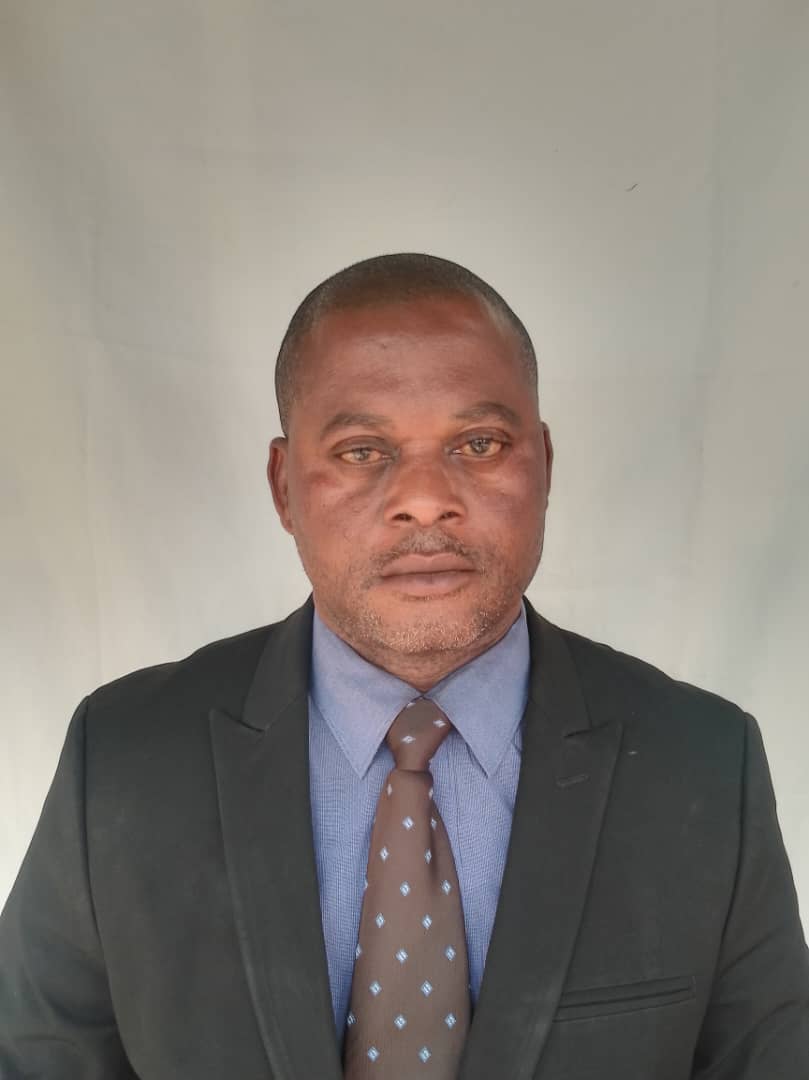
Sam Udekwe is a journalist working in the News and Current Affairs department, Enugu State Broadcasting Service (ESBS) Enugu. He is well trained in all genres of journalistic venture.
Mr Sam read Mass Communication, graduating all with Distinction in National Diploma, Higher National Diploma and Postgraduate Diploma at IMT, Enugu and Madonna University, Okija, Anambra state, as well as M.Sc Mass Communication at National Open University of Nigeria.
He is the immediate past NUJ Chairman, Enugu state.
samowailo@gmail.com